Creative WritingA repeated image, phrase or action can give a piece of writing shape. Learn how to choose a recurring detail, change its meaning as the work develops and trim repetitions that no longer serve a purpose.
Read article · 3 min↗
Creative WritingA good title gives readers a useful first impression without trying to tell the whole story. Learn how to find possibilities in your draft, choose the right level of specificity, and test a title against the work it introduces.
Read article · 4 min↗
Creative WritingThe middle of a draft can feel like a long stretch between a promising beginning and an ending you cannot quite see. Instead of forcing the next perfect sentence, try identifying what has changed, choosing a smaller writing task, and leaving yourself a clear path back into the work.
Read article · 4 min↗
Creative WritingCreative nonfiction draws strength from lived experience, but a true story can affect people who never chose to tell it. Learn how to examine your purpose, protect private details, handle uncertain memories and invite input without surrendering your own perspective.
Read article · 4 min↗
Creative WritingA personal essay needs more than a sequence of events. Learn how to find a question, choose revealing scenes, and shape reflection without forcing a tidy lesson.
Read article · 4 min↗
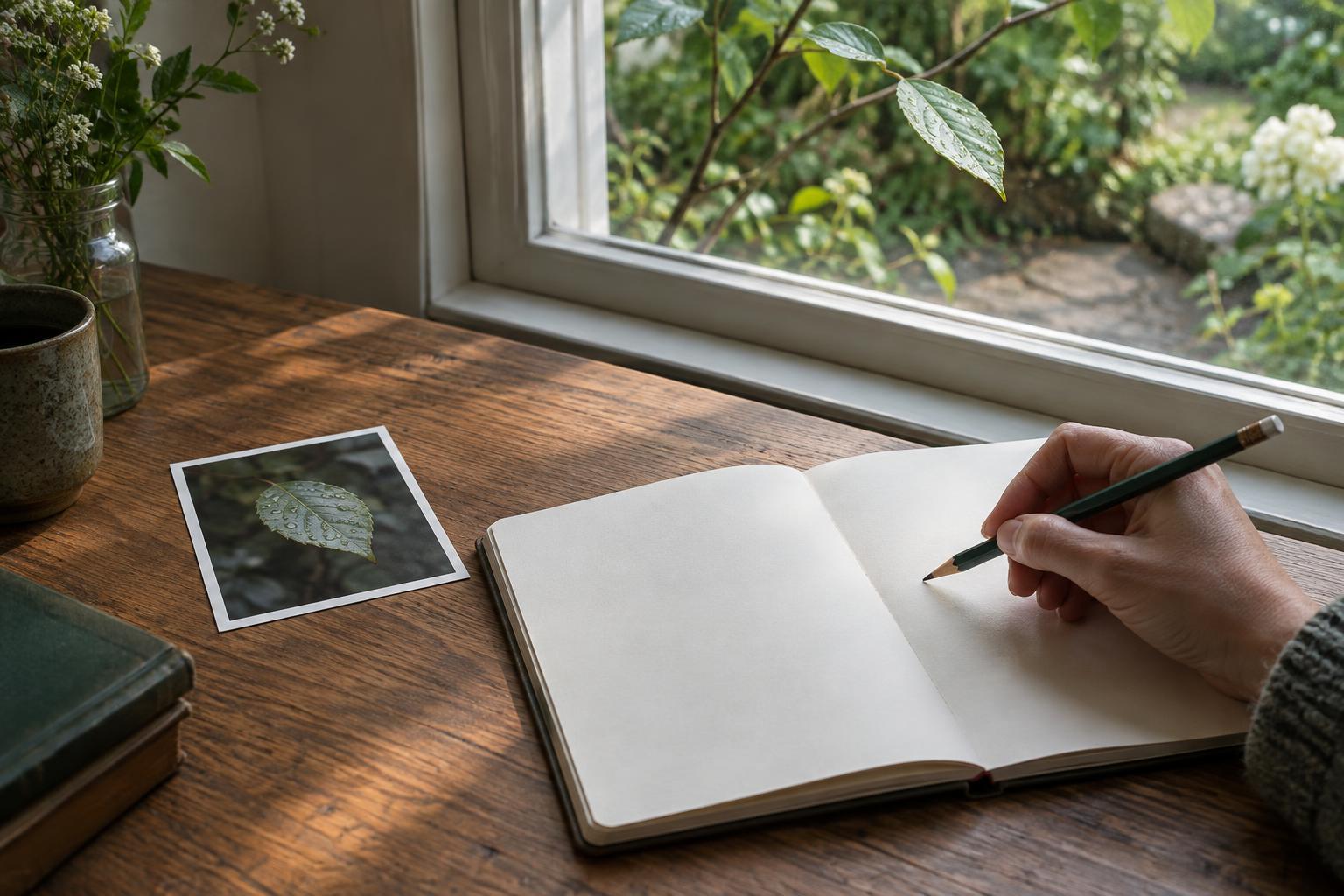
Creative WritingA photograph, a familiar room or a brief moment outdoors can give a poem its starting point. Learn how to choose a detail, turn observation into lines and revise without losing what first caught your attention.
Read article · 4 min↗
Creative WritingFlash fiction and short stories both make room for memorable characters and change, but they ask writers to make different choices about scope, pacing and detail. Learn how to shape an idea for each form and revise with its particular strengths in mind.
Read article · 4 min↗

Creative WritingThoughtful feedback can help a writer see what is reaching the reader and what needs another pass. Learn how to ask for useful responses, comment with care, and turn notes into a revision plan without losing your own voice.
Read article · 4 min↗
Creative WritingA first draft may contain sentences worth keeping, but polishing them too early can distract from larger questions. This guide offers a practical sequence for revising a draft’s purpose, structure, scenes, and gaps before turning to word-level edits.
Read article · 4 min↗

Creative WritingExposition gives readers the context they need, but too much at once can stall a story. Learn how to spot common problems with backstory, explanation, dialogue, and withheld information—and revise each one without losing clarity.
Read article · 4 min↗
Creative WritingA satisfying ending does not have to be happy or surprising. It needs to grow from the choices, questions, and details the story has already given the reader. Here is a practical way to draft and revise one.
Read article · 4 min↗

Creative WritingA strong opening gives readers enough to care about the next moment without handing them the whole backstory. Learn how to choose a useful starting point, ground the scene, and reveal context as it becomes relevant.
Read article · 4 min↗
Creative WritingA memorable setting does more than name a place. It gives readers a few well-chosen details to notice, connects those details to a character’s experience, and lets the surroundings change as the scene unfolds.
Read article · 4 min↗
Creative WritingConvincing dialogue is not a transcript of real speech. Learn how to give each exchange a purpose, let characters speak from their own concerns, use pauses and actions, and revise conversations that stall.
Read article · 4 min↗
Creative WritingA story does not need to show every moment at the same pace. Learn how to use scenes for meaningful change, summary for necessary transitions, and a blend of both to keep readers oriented and engaged.
Read article · 4 min↗
Creative WritingA story’s tense affects more than the verbs on the page. Past and present tense can change how close readers feel to an event, what they expect the narrator to know, and how smoothly a story moves through time. Here is a practical way to choose between them and revise with intention.
Read article · 4 min↗

Creative WritingPoint of view shapes what readers know, whose voice they hear, and how close they feel to a character. Learn when first person, third-person limited, or third-person omniscient might serve your story—and try a short exercise before you commit.
Read article · 4 min↗
Creative WritingA short story does not need an elaborate outline. Give a character a specific want, place something in the way, and follow the choices that lead to an ending. This practical guide shows how to build that shape without making the story feel predictable.
Read article · 4 min↗

Creative WritingA character becomes easier to follow when readers understand what they are trying to do and why it is difficult. Learn how to shape a specific want, choose an obstacle that creates meaningful choices, and test both through scenes.
Read article · 4 min↗

Creative WritingA writing prompt can give you a starting point, but it does not have to dictate the whole story. Learn how to choose a small idea, give it a character and a question, write a first scene, and make a simple plan for what comes next.
Read article · 4 min↗

Creative WritingA writing practice does not require an empty afternoon. Learn how to choose a small, repeatable session, find ideas in ordinary life, and keep going without turning every draft into a test.
Read article · 4 min↗