Begin with a small field of attention
You do not need an unusual subject to begin a poem. A photograph of an empty porch, light on a kitchen wall or a glove left beside a path can offer enough material. The useful question is not “Is this important enough?” but “What keeps drawing my eye?” Choose one image or moment you are willing to look at closely for several minutes.
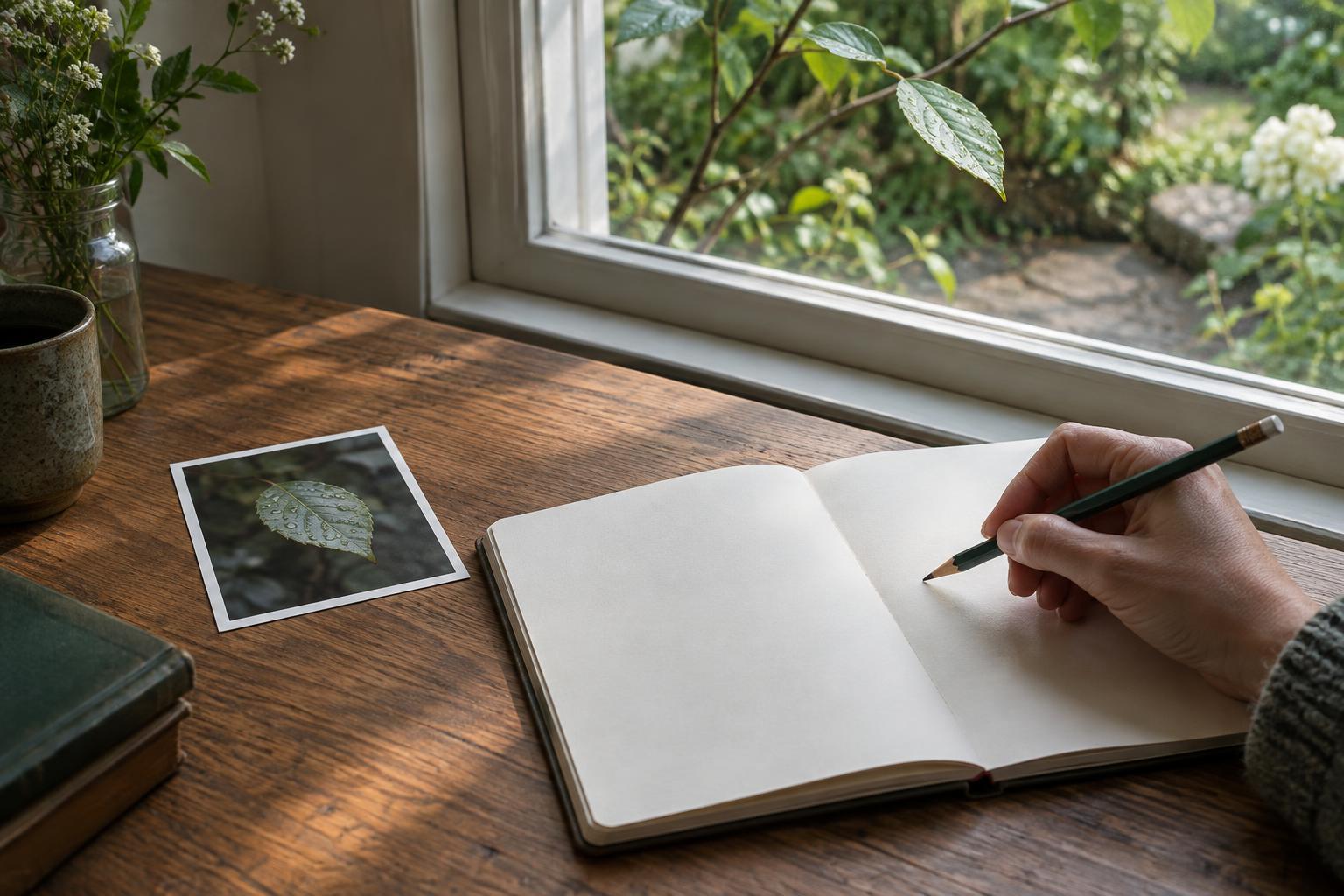
If you are working from life, pause before naming what the scene means. Notice shapes, colors, sounds, textures and movement. If you are working from a photograph, look beyond its obvious subject: What sits at the edge of the frame? What seems still, and what suggests motion? Write down five details without trying to make them poetic. This list is a supply of material, not a test.
Follow the detail that raises a question
Read your list and circle one detail that feels specific or slightly surprising. Perhaps the glove is turned inside out, or the porch light is on in daylight. Ask what that detail makes you wonder. A poem can grow from the distance between what you can see and what you cannot know. You do not have to solve the mystery; you can let the question give the draft direction.
Now write a few sentences beginning with “I notice,” “I remember” or “I wonder.” Keep whatever leads somewhere and discard the rest. An observation might bring up a memory, but resist the urge to explain every connection. A line about a cup cooling on a table may carry more feeling than a sentence announcing loneliness. Let readers encounter the scene before you tell them what to feel.
Make a first draft that can wander
Set a short, comfortable writing period and draft without stopping to polish. You might begin with a plain statement: “The porch light burns at noon.” Follow it with the next thing you notice, remember or imagine. If the poem moves away from the original image, let it go for now. The image is a doorway, not a rule requiring every line to stay in the same place.
Try writing ten to fifteen lines, even if some are fragments. Give yourself permission to leave gaps. A poem does not need to tell the whole story of a photograph or account for every object in a room. It can stay with one change: a shadow lengthening, a sound fading or the speaker realizing they have been watching the same spot for some time. When you reach a natural pause, stop rather than adding a concluding lesson.
Revise for precision and movement
After a break, read the draft aloud. Mark the lines that make you see, hear or feel something clearly. Then look for phrases that merely repeat what those lines already suggest. Replace broad words such as “beautiful,” “sad” or “interesting” where a particular detail can do the work. If you have written “the old house looked lonely,” for example, consider what you actually saw: a curtain caught in a closed window, or one chair facing the street.
Pay attention to where the poem shifts. It might move from the scene to a memory, from certainty to doubt, or from a wide view to one small object. That turn can help you decide what belongs in the draft. Line breaks can also shape the reader’s pace: end a line where you want a brief pause or where the next word changes an expectation. Read each version aloud to hear whether the breaks help rather than interrupt.
Keep the image, leave room for the reader
A finished poem need not explain why its starting image mattered to you. It does need to offer enough on the page for someone else to enter. Check whether a reader can picture the central detail and follow the poem’s movement, even if some meaning remains open. If the draft feels vague, add a concrete observation. If it feels crowded, remove a sentence that interprets an image already doing its work.
When writing about people you observed, remember that your view is limited. Describe what you noticed without inventing someone else’s private thoughts as fact. You can shift attention to your own response, or change identifying details if you choose to share the poem. Then give the draft a title that adds a useful angle rather than repeating its first line. Save the earlier version, too: it may hold an image worth returning to in another poem.