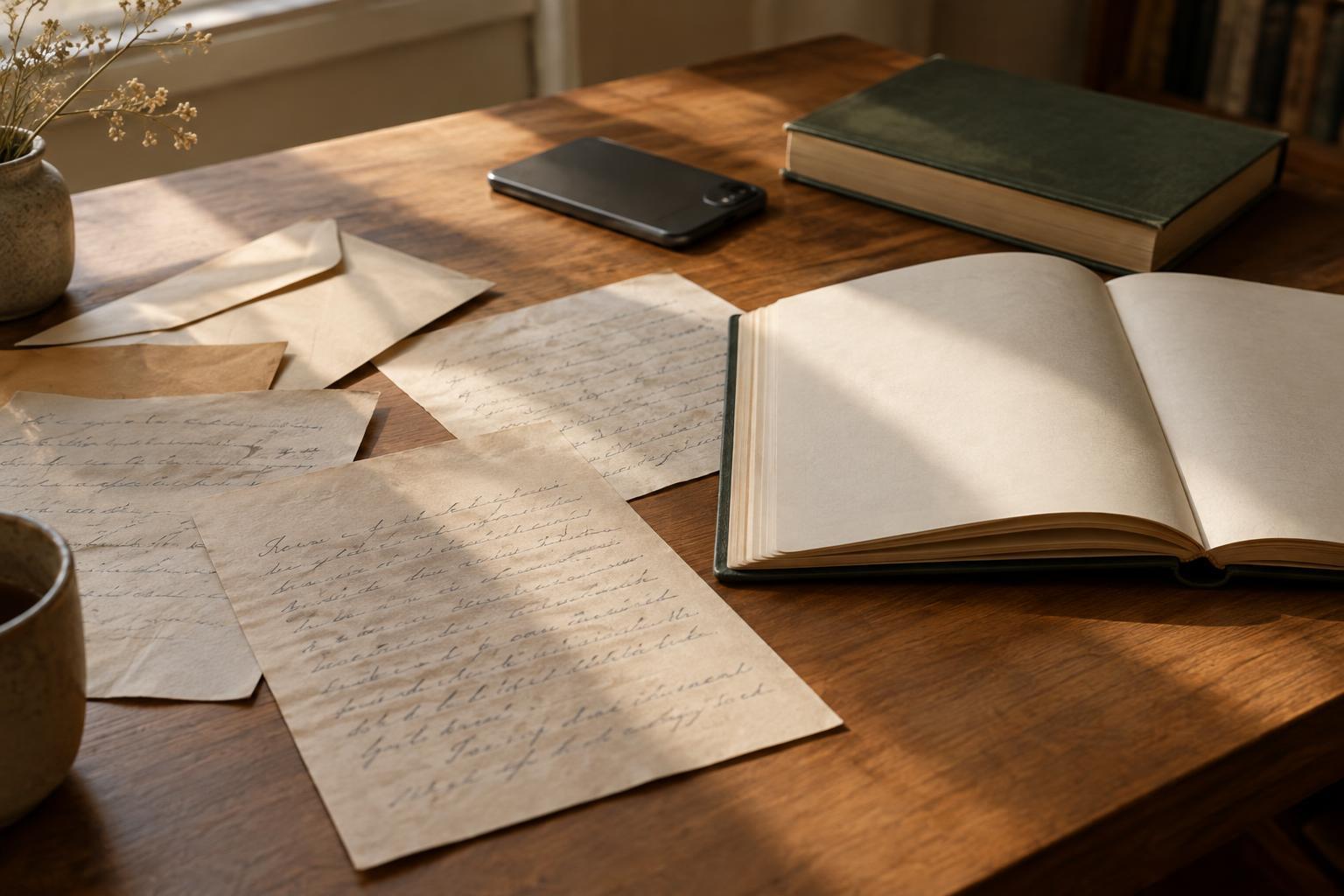
What makes a story epistolary?
Epistolary fiction tells a story through documents rather than relying entirely on continuous narration. Letters are its familiar starting point, but a novel might also use diary entries, emails, text messages, reports, or a mixture of forms. A document can give readers an account of an event, show one character trying to persuade another, or reveal a detail its writer does not realize is important.
Not every story with a letter in it is epistolary. The distinction is how much of the storytelling the documents carry. If removing them would leave the plot and its key relationships largely intact, they may be occasional devices. In an epistolary work, reading the documents—and noticing who wrote, received, or kept them—is central to understanding what happened.
Why the form changes the reader’s role
A conventional narrator can move between scenes and explain what characters cannot see. A letter writer has a narrower view. They might describe yesterday’s argument to a friend, soften their own behavior, or leave out a fact they assume the friend already knows. Readers must weigh that account against later documents instead of treating it as a complete record. This does not mean every writer is dishonest; even sincere accounts are shaped by memory, audience, and purpose.
The space between documents can matter as much as the documents themselves. A reply that arrives after several entries may change the meaning of an earlier promise. An unanswered message can suggest distance without explaining its cause. This gives readers room to form theories, then revise them as another voice enters the conversation. The pleasure often lies in that gradual assembly, not simply in finding a final answer.
What different documents can do
The kind of document affects a story’s pace and intimacy. A diary can feel private, though its writer may still be editing their thoughts for the page. A letter usually has an intended reader, making its greeting, omissions, and requests part of the characterization. Brief messages can create quick exchanges or sharp interruptions. A formal report may sound restrained even when it describes something emotionally charged.
When a work combines formats, the contrast can be revealing. Two people may describe the same encounter differently in a personal note and an official account. A saved message may preserve words that its sender wishes they could change. These possibilities are not rules: a long letter can move briskly, while a short text exchange can require careful rereading. What matters is how the chosen form shapes what can be said, to whom, and when.
How to read the gaps without losing the story
If the format feels unfamiliar, begin by tracking three simple questions: Who made this document? Who was meant to see it? When does it fall in relation to the last one? A date or sign-off may answer some of these questions, while the contents answer others. You do not need a complete timeline at once. Notice a change in tone or a missing reply, then keep reading to see whether another document adds context.
It also helps to separate what a character knows from what a reader can infer. One correspondent may believe a friendship is secure while the other’s letters grow more guarded. Neither voice has to be the novel’s final authority. Epistolary fiction invites readers to take each document seriously without assuming it tells the whole story. The result can feel unusually close to the characters: you encounter their words directly, while doing some of the work of connecting them.