The difference is more than length
Flash fiction and short stories share the basic work of fiction: they invite a reader into a situation, create a sense of movement and leave an impression. Their difference is not simply that one uses fewer words. Flash fiction often concentrates on a single charged moment, decision or discovery. A short story can give that moment more room to develop through scenes, relationships and consequences. Neither form is a compressed version of a novel; each benefits from a deliberate sense of what belongs inside its boundaries.
Word-count labels vary among writers and publications, so a fixed cutoff is less useful than the experience of reading the piece. Flash tends to ask readers to infer more from fewer details. A short story can still be spare, but it has space to establish a pattern and then complicate it. When choosing a form, consider how much of the change in your story needs to happen on the page.
What flash fiction asks you to leave unsaid
In flash fiction, the opening often has to do several jobs at once. A character might enter carrying a returned gift, for example, and that object can suggest a relationship, a recent event and a possible conflict without an explanation of each. Specific details earn their place when they reveal more than one thing. A setting can show mood and pressure; a line of dialogue can expose what someone wants while hinting at what they cannot say.
That concentration does not mean flash must rely on a twist. A small turn in understanding can be enough: a character sees an ordinary exchange differently, makes a modest choice or realizes that a choice has already been made. The ending may leave part of the situation open, but it should feel connected to what came before. Productive ambiguity gives the reader something to consider; missing information merely makes the action hard to follow.
What a short story can build over time
A short story gives a writer room to let pressure accumulate. A character can try one approach, meet resistance and respond in a way that reveals another side of them. Two or three scenes may show how the meaning of an object, place or conversation changes. This room is especially useful when the central interest lies in a relationship or in the gap between what a character believes and what their actions suggest.
More space, however, creates its own demands. Every scene should contribute to the story’s movement, even if its effect is quiet. A scene might sharpen a desire, introduce a complication or alter what the reader understands. Background can enrich a short story, but it works best when it matters to the present action. If a passage explains a character’s history without changing the stakes of the scene, the story may not need it.
Choose the form that fits the idea
Before drafting, describe your idea in one sentence: who wants what, and what makes that difficult now? Then ask where its energy lives. If it rests in a single encounter, image or reversal of expectation, try flash. If it depends on watching attempts and consequences unfold, a short story may serve it better. This is a working choice, not a rule. A brief piece can imply a whole life, while a longer one can remain closely focused on one afternoon.
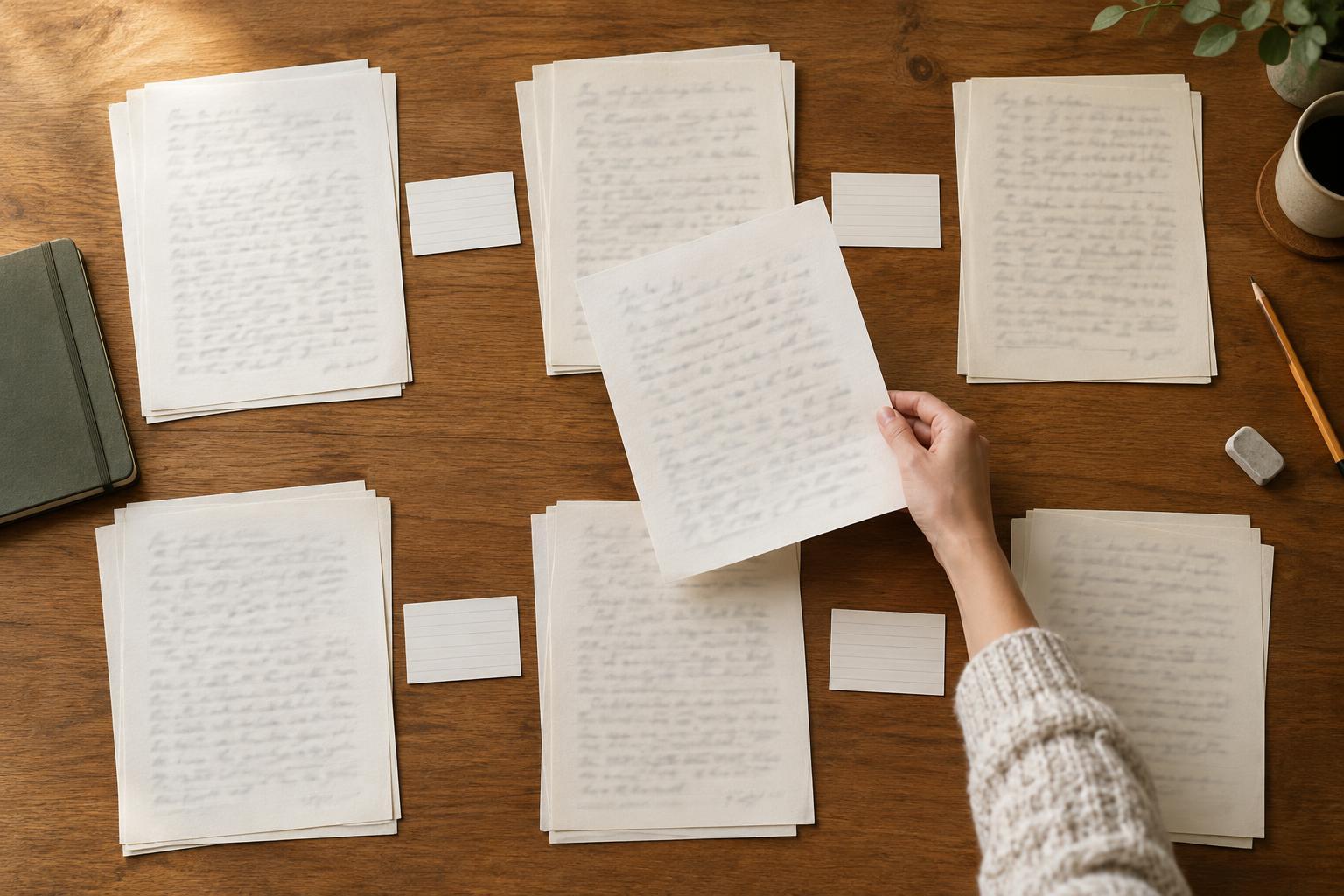
You can test the choice by drafting the same premise two ways. Write a flash version that begins as close as possible to the decisive moment. Then sketch a short-story version with several scenes and note what each adds. If the added scenes deepen the conflict, keep exploring them. If they only explain what the flash version already conveys, the smaller form may be stronger.
Revise according to the form’s needs
For flash, examine each sentence for both clarity and purpose. Cut repeated explanations, but keep the detail that lets a reader understand the basic situation. Pay particular attention to the opening and ending: the first should provide a foothold, and the last should change or deepen what the reader has taken in. Reading aloud can help you hear where a compressed piece becomes rushed rather than precise.
For a short story, look first at the shape of the whole. Track what changes from scene to scene and where the central tension grows or fades. Then consider whether the ending follows from the character’s choices, even if it remains unresolved. Both forms ask for selection. The writer’s task is not to fit in everything imagined about the characters, but to give readers enough to experience this particular story.