Let the draft tell you what matters
A title is often the first thing a reader sees, but it does not have to be the first thing a writer decides. If you name a piece too early, you may feel obliged to keep writing toward that name even after the work changes direction. A working title is enough while you draft. Once you can see the finished shape of the piece, you can choose a title that belongs to it.
Begin by writing a one-sentence description of what happens, then a second sentence about what stays with you after the ending. Those answers may differ. A story might follow two siblings cleaning out a shed, while its lasting concern is what each sibling remembers differently. The title could point to the shed, an object they find, or the gap between their memories. It need not explain all three.
Collect possibilities from the writing itself
Read your draft with a list beside you. Note recurring objects, places, gestures, images, and unusual words. Also mark moments when the piece changes: a decision, a discovery, or a sentence that shifts its emotional weight. These details offer titles connected to the actual writing rather than to a general idea of what a title should sound like.
Try several kinds of candidates before judging them. A title might name a concrete thing, such as The Blue Recipe Box; a setting, such as Behind the Feed Store; or an action, such as Leaving the Porch Light On. You can also try a phrase drawn from the draft, provided it still makes sense on its own. Making a varied list helps you avoid settling for the first appealing line.
Choose the right amount of information
A title makes a small promise. It suggests what kind of attention the work deserves without giving away everything the reader will discover. A very broad title may offer little to hold onto, while a title that explains the conclusion can flatten a piece before it begins. Look for a point between those extremes: enough detail to create interest, enough room for the writing to unfold.
The form can help you decide how direct to be. For a practical essay, a clear title may serve the reader best. A personal essay can name the experience at its center or the image through which it is told. A poem may benefit from a title that provides context absent from its brief lines, or one that adds a productive contrast. In fiction, a title can establish a place or mood, but it should not promise a mystery or adventure if the story is chiefly quiet and reflective.
Test the title beside the opening and ending
Place each candidate above the first paragraph or stanza and read forward. Does it make the opening more inviting, or does it tell the reader too firmly what to think? Then read it again after the ending. A fitting title often gathers meaning as the piece progresses: it still makes sense at the end, but may mean a little more than it did at the start.
It can help to ask another reader what they expect from the title before showing them the draft, then ask how it feels afterward. You are not looking for unanimous approval. You are checking for a distracting mismatch. If a title leads someone to expect a comic piece and the writing is solemn, that difference may be intentional—but it is worth choosing deliberately.
Keep the choice flexible until the piece is ready
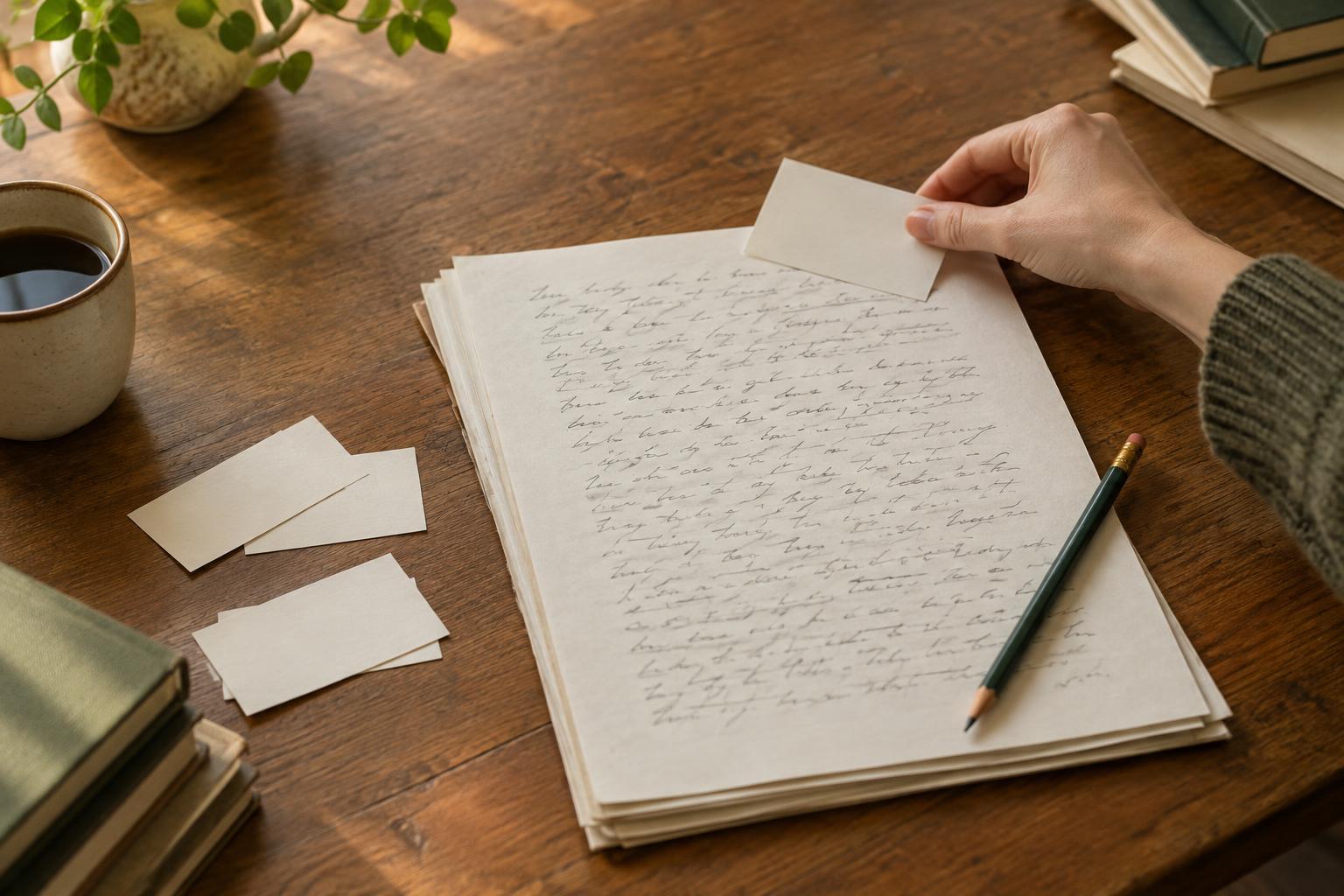
If several titles work, write them at the top of separate copies or notes and live with each for a day. Notice which one you can say naturally, remember easily, and still recognize as true to the piece. Check whether its most distinctive word appears everywhere in the draft or only in a passage you may cut. A title tied to a fragile detail may need another look after revision.
You do not need a title that captures every theme or impresses every reader. You need one that opens the door to this particular piece. Keep a list of the candidates you set aside; a good unused title might become the start of something else. For now, choose the one that makes you want to read the work beneath it—and that the work can honestly support.