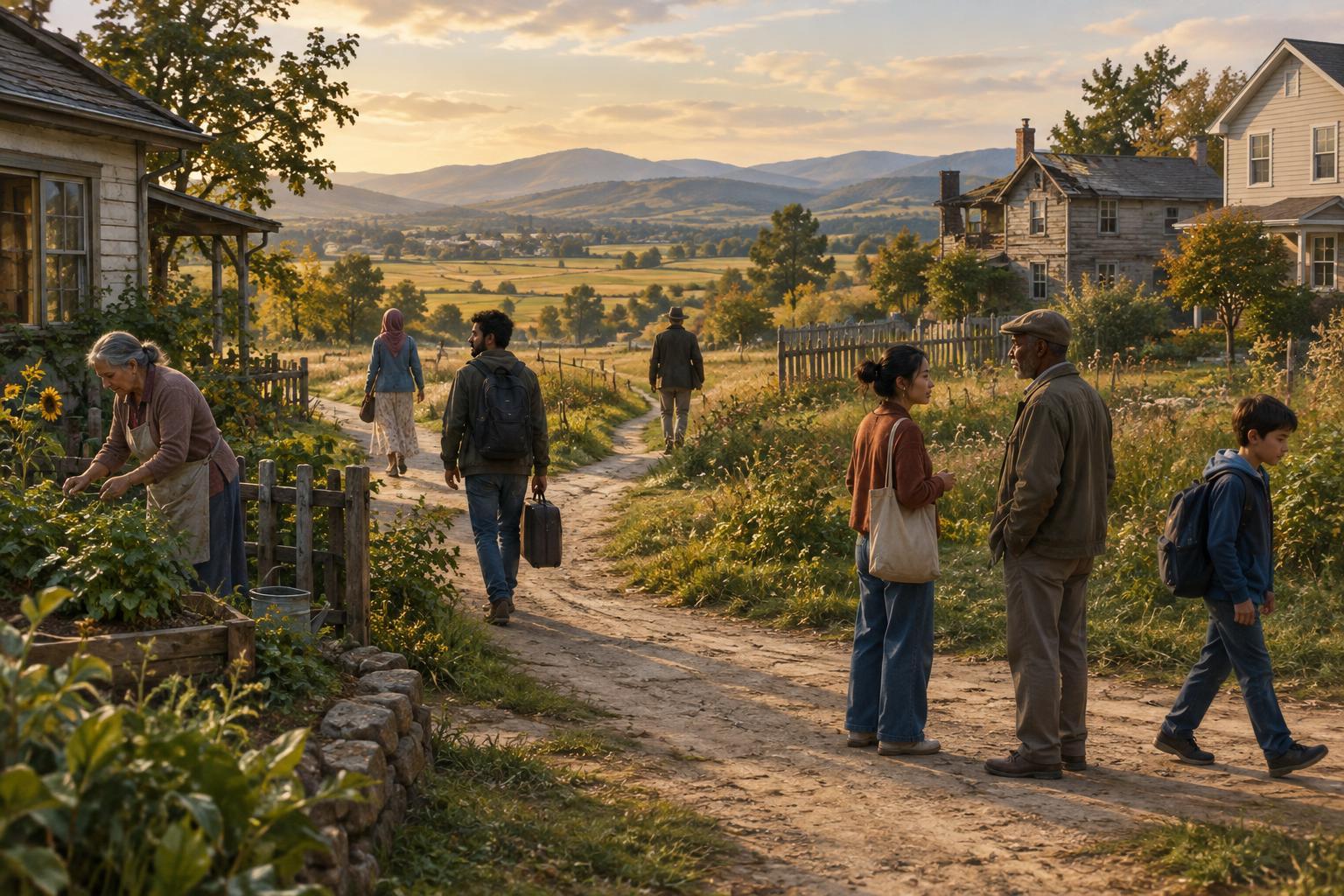
Every regional story has a vantage point
A story set in Kansas may begin with a road, a family kitchen, a neighborhood, a farm or a workplace. Each setting invites readers to see a particular part of the state. None provides a view from everywhere at once. The narrator’s age, relationships, work, language and reasons for being in a place all shape what feels familiar, surprising or worth describing.
When reading, start with a simple question: Who can observe what is happening? A newcomer might notice details a lifelong resident barely mentions. A child might understand the mood of a room but not the history behind it. A narrator looking back after many years may know the outcome yet still be uncertain about another person’s motives. These limits need not be flaws. They can give a story its texture, provided readers remember that a character’s view is not the whole region’s view.
Look at what the story makes visible
Regional writing often relies on recognizable details: weather, distance, buildings, fields or the rhythms of a town. Notice which details receive careful attention and which serve only as a backdrop. If a story describes a landscape as empty, for example, ask whether people live, work, gather or remember there, even if the narrator does not see them. “Empty” may tell us as much about the observer as it does about the place.
The same question applies to people. Who has a name, a speaking role or a life beyond the main character’s concerns? Who appears chiefly to deliver information or create atmosphere? A brief work cannot develop everyone, but patterns of attention still matter. Looking at those patterns helps readers describe the story’s choices precisely rather than labeling it complete or incomplete.
Treat gaps as questions, not automatic verdicts
A missing perspective can have several explanations. A tightly focused memoir may stay close to one household. A short story may limit what its narrator knows. Another work may lean on a familiar image of Kansas without examining it. Before deciding what a gap means, ask what the piece appears to be trying to do and how its boundaries affect that purpose.
Then make the gap specific. Instead of saying “This leaves people out,” try “We hear about the town’s changes from a returning visitor, but not from anyone who stayed.” That observation opens a discussion rather than closing one. It may lead to questions about work, belonging, memory or who gets to call a place home. It also leaves room to appreciate an effective scene while recognizing the limits of its frame.
Read across more than one Kansas
No single book should be expected to represent Kansas in full. Readers can build a wider picture by placing works beside one another: fiction and memoir, poems and essays, stories set in different communities, or accounts told by people with different ties to a place. The goal is not to collect a definitive set of voices. It is to notice where accounts meet, disagree or ask different questions.
In a book group, try pairing passages rather than making broad comparisons between entire works. How does each writer describe arrival or departure? Who notices the cost of a decision, and who describes its promise? What does “home” mean to each speaker? Close comparisons keep the conversation grounded in the writing and make differences easier to discuss without treating any one person as a spokesperson for everyone who shares a background.
Bring curiosity to the conversation
Perspective can be a sensitive subject when readers recognize their own communities in a story. Begin with what is on the page: a word choice, a scene, an absence or a change in point of view. Separate an interpretation from a claim about the author’s intentions. “I read this description as distant” invites more discussion than “The writer did not care about this place.”
For writers, the same habit can become a revision tool. Identify whose knowledge carries each scene. Consider what a character takes for granted, what they misunderstand and what they cannot reasonably know. If a place exists mainly to symbolize freedom, hardship or escape, look again for the ordinary activity that continues beyond the protagonist’s journey. Attending to those limits does not require telling every possible story. It helps make clear whose story this is—and leaves readers aware that others remain.