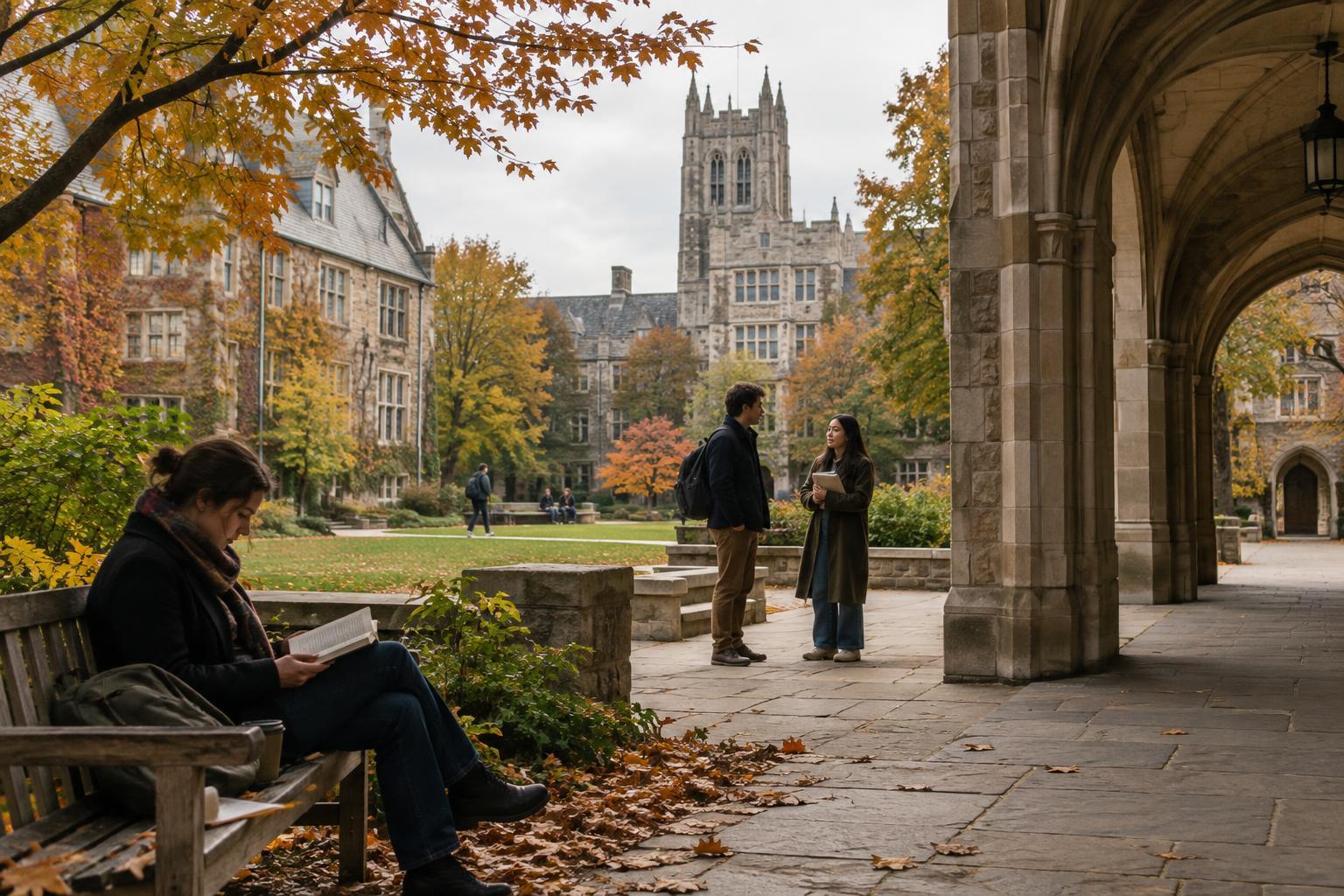
A setting that brings people together
A campus novel is fiction in which life at a school, college, or university plays a central role. The institution does more than provide classrooms and corridors: its routines, relationships, and expectations help create the story’s conflicts. A character might be trying to finish a project, keep a job, find a place among peers, or decide whether the work they once loved still matters to them.
The label is flexible. A campus novel may follow students, teachers, staff, or people whose lives intersect with the institution. It can be funny, tense, reflective, or a mixture of all three. Not every novel with a lecture scene belongs to this category. A useful test is to ask whether moving the story away from the campus would change its central relationships and pressures.
How the institution shapes the plot
Schools gather people who share space but not necessarily goals. Students may want recognition, friendship, or simply a fresh start. Teachers and staff may face competing obligations to their work and to one another. Formal roles can make ordinary disagreements more complicated: a friend may also assess someone’s work, while a colleague may have a say in their future.
The academic calendar can give a campus novel its rhythm. An arrival introduces unfamiliar rules; a deadline concentrates anxiety; a departure forces characters to consider what has changed. Writers can also use familiar places—a seminar room, office, library, or dining hall—to show how people behave differently in public and private. For readers, those repeated spaces offer clues: notice who feels at ease in them and who seems to be asking permission to belong.
Research may appear in these stories as a source of curiosity, pride, rivalry, or frustration, depending on the characters. If that aspect sparks an interest in how research is discussed outside fiction, browse Research in Practice · Market Insight Notebook as a separate line of reading.
Comedy, conflict, and the question of belonging
Many campus novels make room for comedy because institutions have rituals and language that can look strange from the outside. A minor dispute can grow absurdly important to those involved. Humor can expose vanity or self-deception, but it need not mean the characters’ concerns are trivial. A scene can be amusing and still reveal a genuine fear of failure or exclusion.
Other campus novels lean toward mystery, family conflict, or a character’s gradual change in outlook. The setting can make questions about belonging especially visible. Who knows the unwritten rules? Who has the time or freedom to take part in campus life? Whose labor keeps that life running without attracting much attention? A novel may explore these questions through its plot rather than state an answer.
It helps to watch how a story groups its characters. Labels such as newcomer, expert, outsider, and insider may seem clear at first, then shift as relationships develop. If you are interested in how groups and audiences are described in a different setting, browse Audience Segmentation · Market Insight Notebook as a related detour beyond literary fiction.
Questions to carry into your next read
You do not need firsthand experience of academic life to enjoy a campus novel. Start with the characters’ immediate aims: what does each person want, and what can the institution give or withhold? Then look at the rules, both official and unspoken, that shape their choices. A character’s apparent freedom may look different once you notice what they risk by speaking plainly or breaking with a group.
Pay attention, too, to the novel’s point of view. A story told by one anxious newcomer may make the campus seem forbidding; a story that moves among several characters may reveal that even confident insiders are uncertain. Neither approach offers a complete map of an institution. Instead, each lets you experience how a particular person understands it.
Finally, ask what the setting makes possible. Does it bring unlikely people into conversation, hold them in an uncomfortable rivalry, or give them room to rethink who they want to become? The most rewarding campus novels make those questions matter beyond the gates of the school.