What makes a story a Western?
A Western is not defined by the presence of a cowboy. Its recognizable ingredients are a setting associated with the American West, a conflict shaped by that place and a sense that people are negotiating the rules of a changing community. A story might follow a cattle drive, but it might just as readily follow a family trying to keep a home, a traveler entering an unfamiliar town or neighbors arguing over land and water. The landscape matters because distance, weather and access to resources can affect what characters are able to do.
Many Westerns also ask who gets to make rules and who must live under them. A sheriff’s badge, a property claim or a promise made between neighbors can carry different kinds of authority. When those claims collide, the resulting decision gives the story its tension. A Western may end with a showdown, but the question beneath it is often broader: what kind of place will this become, and who will be allowed to belong?
Familiar conventions, with room to change
Certain scenes signal the genre quickly: an arrival in a small town, a journey across difficult terrain, a dispute over a boundary, an uneasy bargain or a confrontation that cannot be postponed. Westerns often use a capable outsider or a person caught between personal loyalty and public duty. These conventions are storytelling tools, not a required checklist. A writer can use a long journey to build trust between characters, for example, or make a quiet town meeting more consequential than a fight.
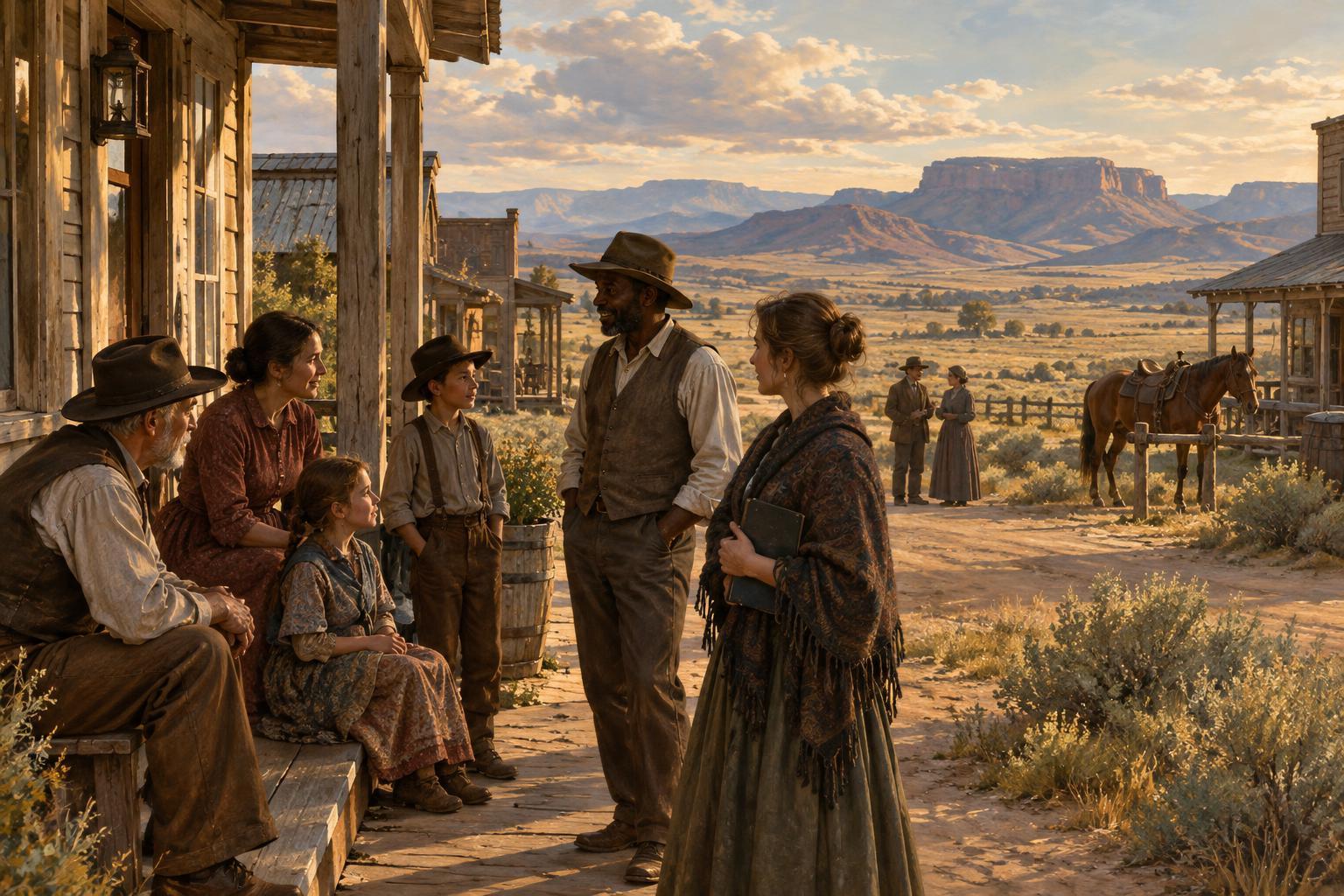
The familiar image of the lone hero can be compelling, but it can also hide how much survival depends on other people. Families, hired workers, merchants and neighbors may all sustain a community. Paying attention to who cooks, repairs, trades, tends animals or passes along information can reveal another story beneath the central adventure. Even when one character makes the final choice, that choice rarely happens in isolation.
Misconception: the West has only one kind of story
Cowboys and outlaws are memorable figures, but treating them as the whole genre narrows what readers can see. Western fiction can make space for domestic life, work, friendship, migration and the building or breaking of communities. It can be brisk and adventurous, reflective and character-driven, or critical of the values its characters inherit. The setting does not dictate a single mood or a single answer to a conflict.
Nor should every character be treated as having the same relationship to the land. A settler’s hope for a new beginning may exist alongside another person’s loss. Indigenous peoples are not a backdrop to someone else’s adventure, and a thoughtful reader can notice whether a novel gives them distinct perspectives or reduces them to a threat or symbol. The same question applies to women and other characters who are present in a story but given little say in how it is told.
Misconception: a Western is either history or fantasy
Historical detail can make a fictional world feel convincing, but a novel is still a shaped story. Its dialogue, pacing and point of view guide readers toward some experiences and away from others. That does not make a Western useless as a way to think about the past; it means the pleasures of fiction and the demands of historical understanding are different. A vivid scene can prompt curiosity without settling every question about how people lived.
The genre can also reflect an idea of the West rather than simply describe a place. Open land may represent freedom to one character and danger or displacement to another. A town may promise cooperation while exposing unequal power. Instead of asking only whether a story feels authentic, readers can ask what its setting allows the characters to imagine, what it asks them to overlook and whose version of events becomes the lasting one.
How to read beyond the showdown
For a book group, start with a concrete convention. If a stranger arrives in town, ask whose routine is disrupted and why the stranger’s arrival matters. If there is a dispute over land, ask what each side believes it is defending. If violence resolves the plot, consider what remains unresolved afterward. These questions keep the discussion close to the pages while opening up the story’s larger concerns.
Readers new to Western fiction need not begin by deciding whether they like cowboys or gunfights. Look instead for a conflict that interests you: a difficult journey, an uncertain home, a contested rule or a community under pressure. Then notice how the book uses familiar Western elements to explore that conflict. The genre is most interesting when its wide horizons do more than frame an adventure—when they help reveal how people choose to live together.