Look past the familiar props
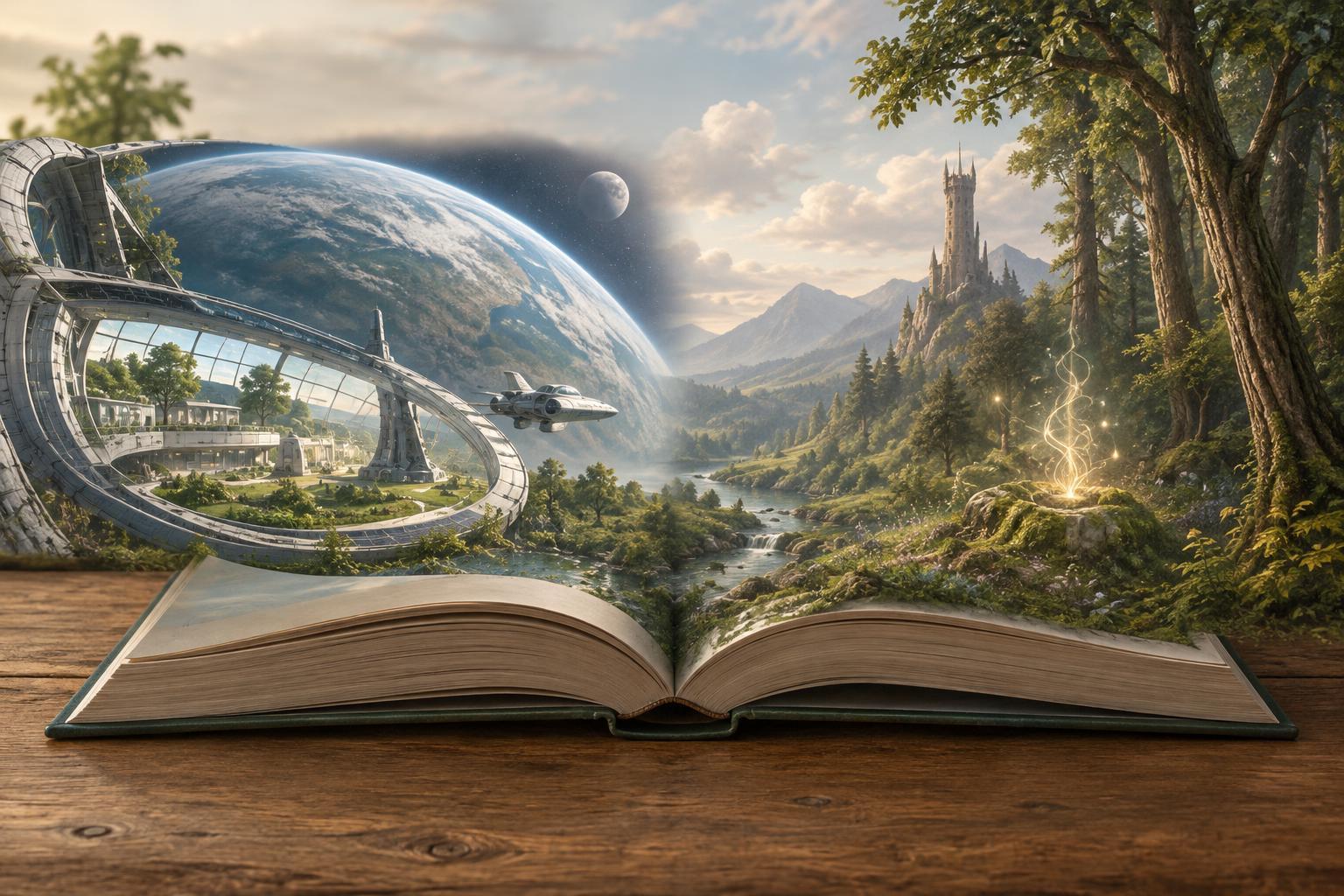
A spaceship usually suggests science fiction; a spellbook usually suggests fantasy. Those clues can help when you are choosing a book, but they are not reliable definitions. A story may have a medieval-looking kingdom with advanced machines, or a city full of modern technology where magic quietly works. The setting’s appearance tells you less than the way the story explains what can happen there.
Both genres ask readers to accept something beyond ordinary experience. The useful distinction is what supports that difference. Science fiction commonly presents its departures from familiar life as consequences of technology, scientific discovery or a change in material conditions. Fantasy commonly presents them through magic, myth or powers that need not follow the rules of the natural world. Neither approach is automatically more imaginative or more serious; each gives a writer different ways to test an idea.
Science fiction asks, “What if this became possible?”
Science fiction often begins with a possibility and follows its consequences. What might change if people could travel between planets, create thinking machines or live in a radically altered environment? The story does not have to prove that its invention could be built. It does, however, tend to invite questions about how the invention works, who controls it and what new problems it creates.
This is why a science fiction story can be about much more than equipment. A new technology might unsettle a family routine, reshape a workplace or force a community to reconsider whom it trusts. The imagined advance gives readers a way to examine familiar choices under unfamiliar conditions. Even when the science is speculative, the characters’ responses can feel recognizable.
A helpful reading test is to ask whether the unusual element is treated as part of a knowable system. Characters may debate its limits, repair it, misuse it or discover that an earlier explanation was incomplete. That attention to causes and consequences often signals a science fictional way of thinking.
Fantasy asks, “What if the world held other powers?”
Fantasy often starts from a different invitation: accept that the world contains forces ordinary life cannot account for, then consider what it means to live among them. A forest might remember promises. A person might bargain with a spirit. A name might carry power. These elements can have firm rules, but the story need not explain them through a scientific discovery.
Fantasy’s core questions frequently concern obligation, belonging, temptation or the cost of power. Who has the right to use a gift? What does a person owe to an inherited tradition? Can a promise bind someone who no longer wants to keep it? Those questions are not exclusive to fantasy, but magic and myth can give them a vivid shape.
Not every fantasy story is set in an invented kingdom or built around a grand quest. The extraordinary can interrupt an otherwise ordinary household or neighborhood. When deciding how to read such a story, pay attention to whether its mystery asks to be solved as a technical problem or lived with as part of a larger, enchanted reality.
Notice what happens at the border
The line between the genres can be deliberately blurred. A machine may produce effects that characters experience as magic. An ancient power may turn out to have a technological origin. Sometimes the story withholds any final explanation. In those cases, forcing a single label may be less useful than noticing which expectations the book draws on at different moments.
You can also ask what kind of answer would satisfy the story. If understanding the device, experiment or changed environment would clarify the conflict, science fiction may be the stronger lens. If the conflict turns on a pact, a prophecy or an encounter with something beyond human control, fantasy may be the stronger lens. A book can support both readings without failing at either.
Use the distinction to start a better conversation
Genre labels are most valuable when they help readers ask sharper questions, not when they become rules for keeping books in separate boxes. For a book group, begin with the story’s unusual element: What do the characters believe about it? Which rules do they understand, and which remain uncertain? Does learning more about it change the meaning of their choices?
Then consider what the imagined world lets the writer examine. A distant planet might make a familiar social habit seem strange. An enchanted object might make a private desire impossible to hide. Whether the book leans toward science fiction, fantasy or both, its genre gives you a route into its central concerns. The most revealing question may not be “Which shelf does this belong on?” but “Why did this story need this kind of world?”