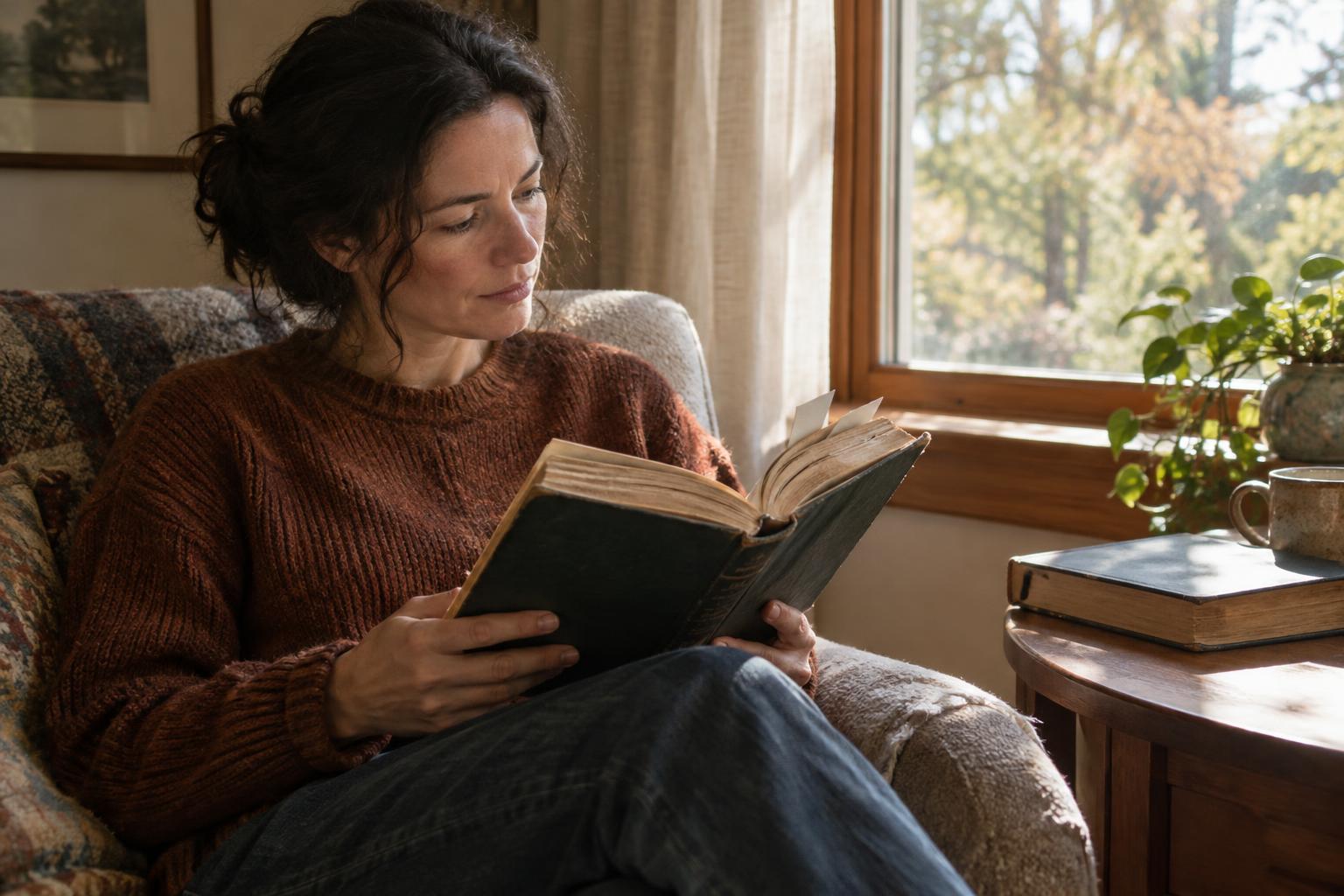
Begin with the reader you are now
The first time you read a book, you may be eager to find out what happens. The second time, you already know the broad shape of the story. That knowledge gives you room to look around. A conversation that once seemed ordinary may carry more weight; a quiet opening chapter may establish a question that the ending never quite settles.
Before you begin, ask what you remember most clearly. Is it a character, a setting, a sentence, or the feeling of reaching the final page? You do not need to test your memory or prove that your first impression was right. Treat it as a starting point. As you reread, notice where the book matches that memory and where it surprises you. Sometimes the passage you remember has changed in your mind; sometimes the passages around it now matter more.
Watch how the beginning prepares the ending
Knowing the ending changes the opening. Pay attention to what the book tells you early and what it withholds. A brief exchange, an object on a shelf, or a character’s reluctance to answer a question may take on a different meaning once you know what follows. Rather than hunting for hidden clues on every page, look for a few details that gain significance later.
Also notice the promises the beginning seems to make. What kind of story do its first pages lead you to expect? Does the ending fulfill that expectation, complicate it, or gently set it aside? This can be especially interesting in a favorite book: the turn you loved might feel less like a sudden surprise and more like something the writer patiently made possible.
Spend time with the people at the edges
On a first reading, the central character often draws most of your attention. On a second, try following someone who stood just outside your focus. Notice when they enter a scene, what they know that others do not, and what they might want beyond their role in the main character’s life. A minor character need not have a secret history to be worth watching; a small choice or repeated habit can change the mood of a scene.
You can also reconsider the judgments you made about the main characters. Were you quick to excuse one person and harsh toward another? Which actions look different now that you know their consequences? Rereading does not require you to forgive anyone or reverse your opinion. It offers a chance to separate what a character intended from what they did, and what you inferred from what the page actually says.
Listen for patterns in the writing
A book’s style can be easy to overlook when you are caught up in the plot. This time, listen for repeated words, images, and kinds of sentences. Perhaps descriptions of weather appear whenever a character faces a choice, or short sentences interrupt otherwise unhurried passages. Ask what those patterns do for your experience of the book rather than trying to assign each one a fixed meaning.
Notice changes as well as repetitions. Does the pace slow when the setting changes? Does the narrator become more certain, more evasive, or more attentive to other people? Even a book you think of as effortless has a particular way of guiding your attention. Reading a favorite passage aloud, if you enjoy doing so, can help you hear its rhythm without turning the whole reread into an exercise.
Let the book and your memory disagree
You may discover that a beloved scene is shorter than you remembered, or that a section you once rushed through now holds you. That is not a failure of memory or a reason to give up your affection for the book. Your first reading belonged to a particular moment in your life; this one belongs to another. The gap between them can be part of the pleasure.
Keep the reread simple enough to enjoy. A note in the margin or a few lines after a chapter may be plenty: What did I miss? What still works for me? What question do I have now? If you are sharing the book with a friend or book group, those questions can open a conversation without demanding that everyone reach the same verdict. A favorite book does not have to feel exactly as it once did to remain worth reading.