Start with what the meal does in the story
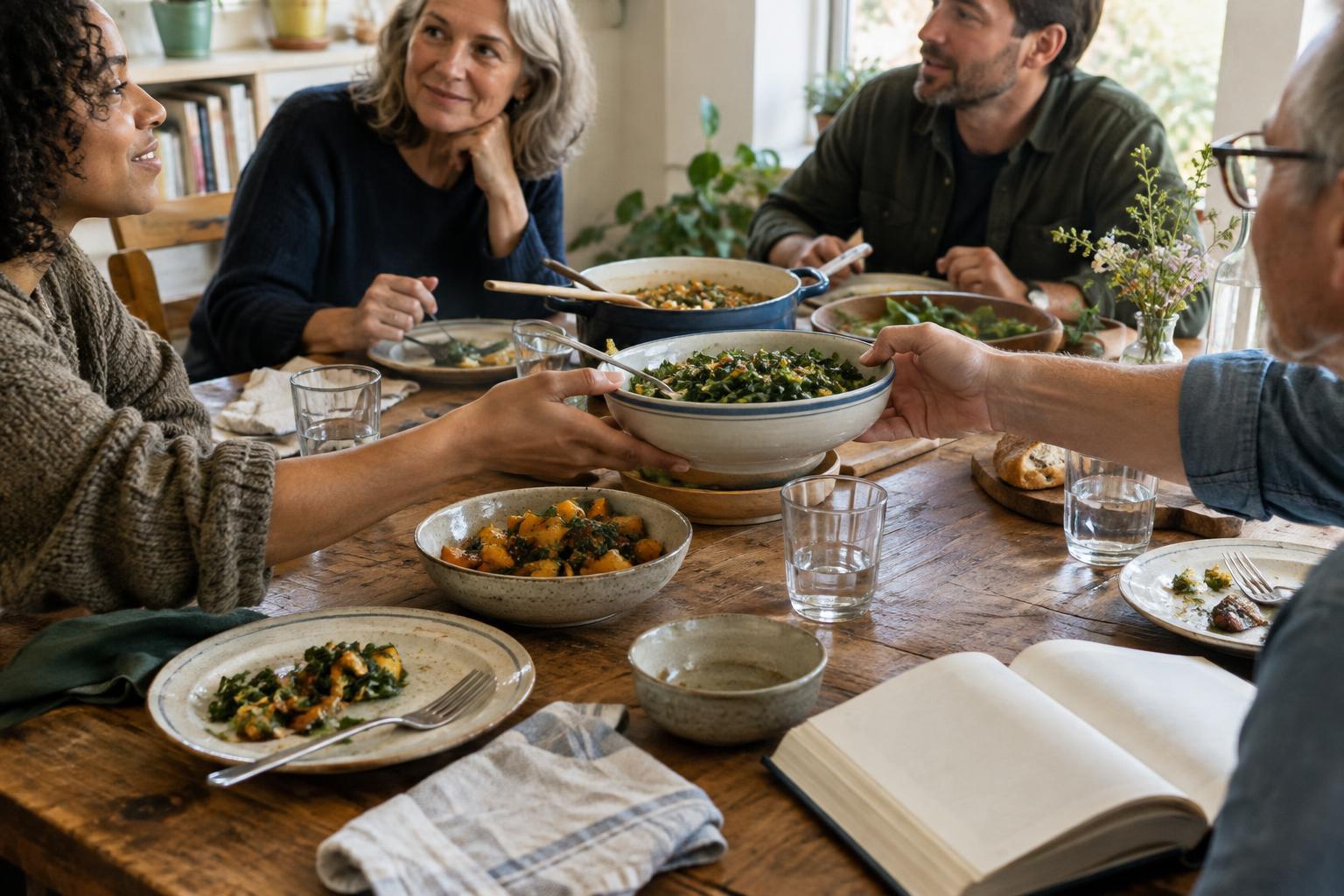
A regional story might linger over a church supper, a restaurant shift, a harvest lunch or a quiet meal eaten alone. It is tempting to read the food mainly as a clue to where the story takes place. But the more useful question is often: what happens because people are eating together, preparing food or trying to get enough of it? A meal can bring characters into the same room, give them a reason to avoid one another or make a difficult conversation possible.
Notice the scene’s movement. Who arrives first, and who is expected to stay until the dishes are done? Does a character serve everyone else before sitting down? Is a familiar meal a source of comfort, or does it bring up an argument? These details help distinguish a scene that merely names local foods from one that uses food to develop character and plot.
Look beyond the finished plate
Food does not appear by itself. Someone shops, grows, cooks, delivers, pays, cleans or goes without. A story may show that work directly, or leave it just outside the frame. Asking who makes a meal possible can reveal relationships that a description of the dish alone cannot. It can also show how time, money, distance and access shape daily choices without turning every meal into a symbol.
A recipe passed between characters, for example, might be an act of welcome. It might also become a point of tension if one person assumes another has the ingredients, equipment or time to make it. Read the exchange as an interaction rather than proof that everyone in a region eats or cooks the same way. The ordinary decisions surrounding food are often more revealing than a claim that one dish represents a place.
Ask whose memories a dish carries
A familiar taste can connect a character to a person or place that is no longer nearby. Yet shared food does not guarantee shared memories. Two relatives might remember the same kitchen differently: one recalls celebration, while the other remembers being expected to do the cooking. A newcomer may encounter a dish with curiosity, while a longtime resident associates it with an obligation. The story’s point of view matters as much as the menu.
When a narrator calls a food “traditional,” pause to ask whose tradition is being named and what the word means in that scene. Traditions can be preserved, adapted, combined or set aside. A character changing a recipe need not signal that a community has lost something; it may show how people make room for new circumstances. Let the story’s characters and context guide your reading instead of supplying a fixed idea of authenticity.
Use food scenes to open discussion, not settle it
In a book group, choose one food scene and begin with what is on the page. Ask who has a choice about being there, what each person wants from the gathering and whether anyone leaves feeling differently than they arrived. Then consider what the story does not show. Are the people who prepared or served the food present as characters, or mentioned only in passing? What might change if the scene were told from another seat at the table?
Readers can share personal associations, but no one needs to serve as a spokesperson for a region or a food tradition. A better discussion leaves room for different experiences while returning to the text. By treating meals as scenes of work, memory and relationship—not as a checklist of local specialties—you can notice how a regional story makes a place feel lived in, one human choice at a time.