Begin with the particular place on the page
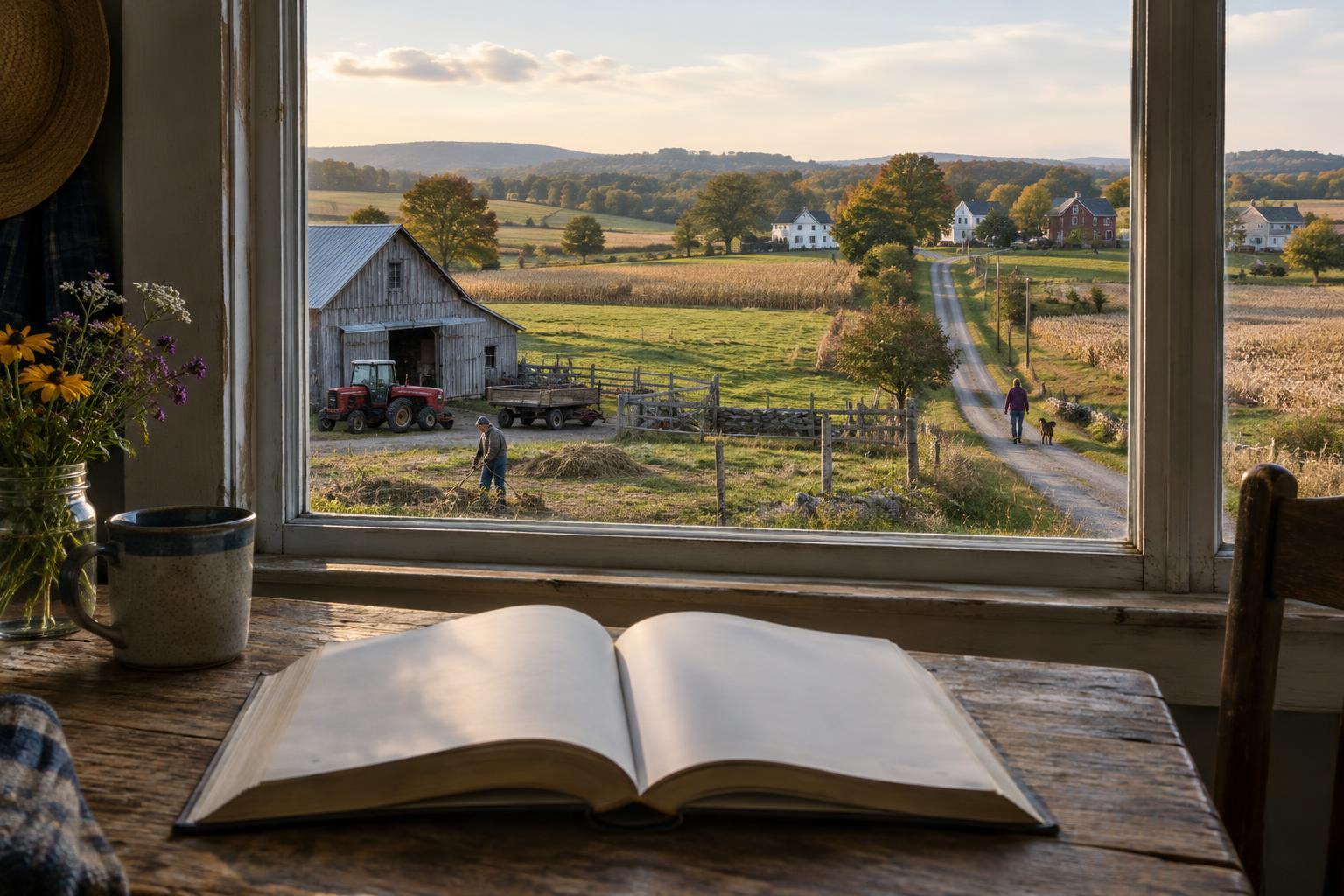
A story set on a farm may invite broad labels: rural, agricultural, small-town. Those labels can help a reader get oriented, but they do not explain the life being portrayed. Start instead with what the story makes particular. What is grown or raised? Who does the work? How far do characters travel for supplies, school, or company? Which details of weather, land, and routine shape their choices? Specifics keep the setting from becoming a symbol for rural life everywhere.
It also helps to notice the difference between a landscape and a community. A field may be described in sweeping terms, while the people living near it have distinct jobs, histories, and relationships. One household's experience of farming may depend on circumstances that another household does not share. Read the setting as a set of conditions for these characters, not as a complete map of the region.
Ask whose work the story makes visible
Farming stories often follow the person operating equipment or making decisions about land. Pay attention, too, to work that happens before and after the scene in the field: keeping records, preparing meals, repairing tools, caring for children, transporting goods, or taking a job away from the farm. A character's contribution may be essential even if the narration gives it little space. Naming that gap is a way to read carefully, not a reason to assume what the author intended.
Ownership and labor are worth keeping separate. A person who owns land, a person who works on it, and a person whose family once worked it may encounter the same place very differently. So might someone who farms as a primary occupation and someone who helps seasonally while earning income elsewhere. When a story uses a phrase such as “the family farm,” ask which family members it centers and what the phrase leaves unexplained.
Treat the narrator as a viewpoint, not a spokesperson
A first-person narrator can make a farming story feel especially direct. That closeness is part of its power, but it does not make the narrator a representative of everyone nearby. Consider what the narrator knows firsthand, what they have heard from others, and what they might misunderstand. Even a generous, observant voice has a limited view. In fiction, those limits may be deliberate; in memoir, they remain part of a person's account.
The same question applies to nostalgia. A character may remember farm life as secure and close-knit, while another remembers demanding work or a lack of choices. Neither response needs to cancel the other. Rather than deciding whether the story is “positive” or “negative” about rural life, look at how affection, hardship, pride, and uncertainty coexist. A story can value a place without claiming that everyone experiences it in the same way.
Notice the lives beyond the farm gate
Regional stories about farming also involve neighbors, local businesses, schools, and people who leave and return. These connections can complicate the idea that rural life is isolated or unchanging. Ask how characters exchange help, information, money, and stories. Who is treated as belonging? Who is new to the community, or has been present all along but seldom appears in the narrative? Such questions invite attention to the story's boundaries without requiring every work to include every possible perspective.
Be cautious with familiar oppositions such as country versus city or tradition versus progress. They can be useful tensions in a story, but people often move between the categories. A character may enjoy a quiet landscape and rely on distant customers; another may resist a family expectation while choosing to remain in the area. Look for moments when the characters' decisions are more complicated than the labels available to describe them.
Make room for more than one account
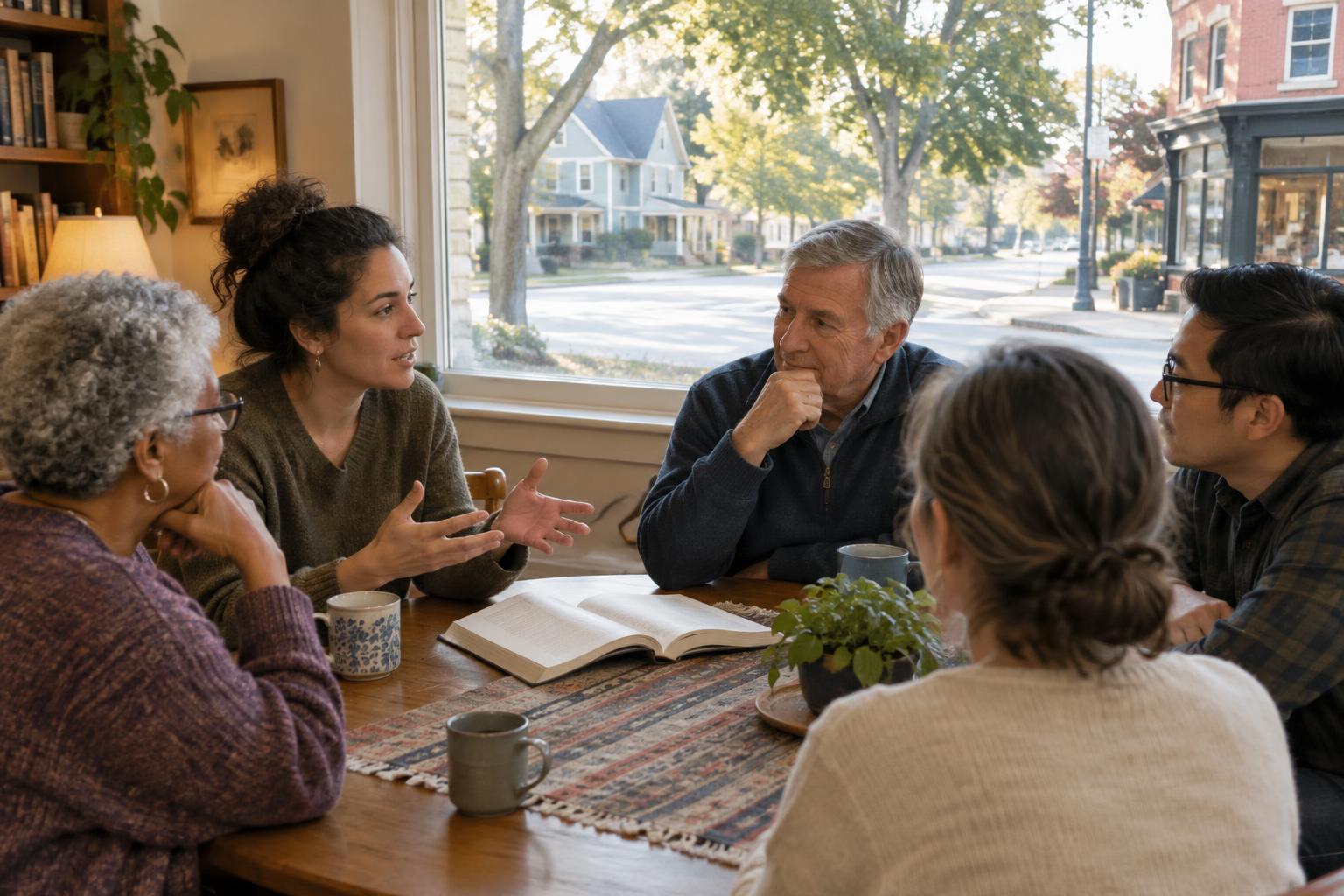
If you are reading with a book group, choose a concrete passage before asking what the story says about farming. Compare how two characters understand the same task, place, or event. Ask what evidence supports each interpretation and what the text does not tell you. This keeps discussion grounded in the work itself, rather than asking one reader's memories or assumptions to settle the meaning of rural life for everyone.
One story can offer a rich encounter with a particular voice; it cannot serve as a census of a region. Reading another work with a different narrator, setting, or relationship to agricultural work may reveal contrasts that neither story could show alone. The goal is not to assemble a single definitive picture. It is to stay curious about the people on the page while leaving room for lives the page does not contain.