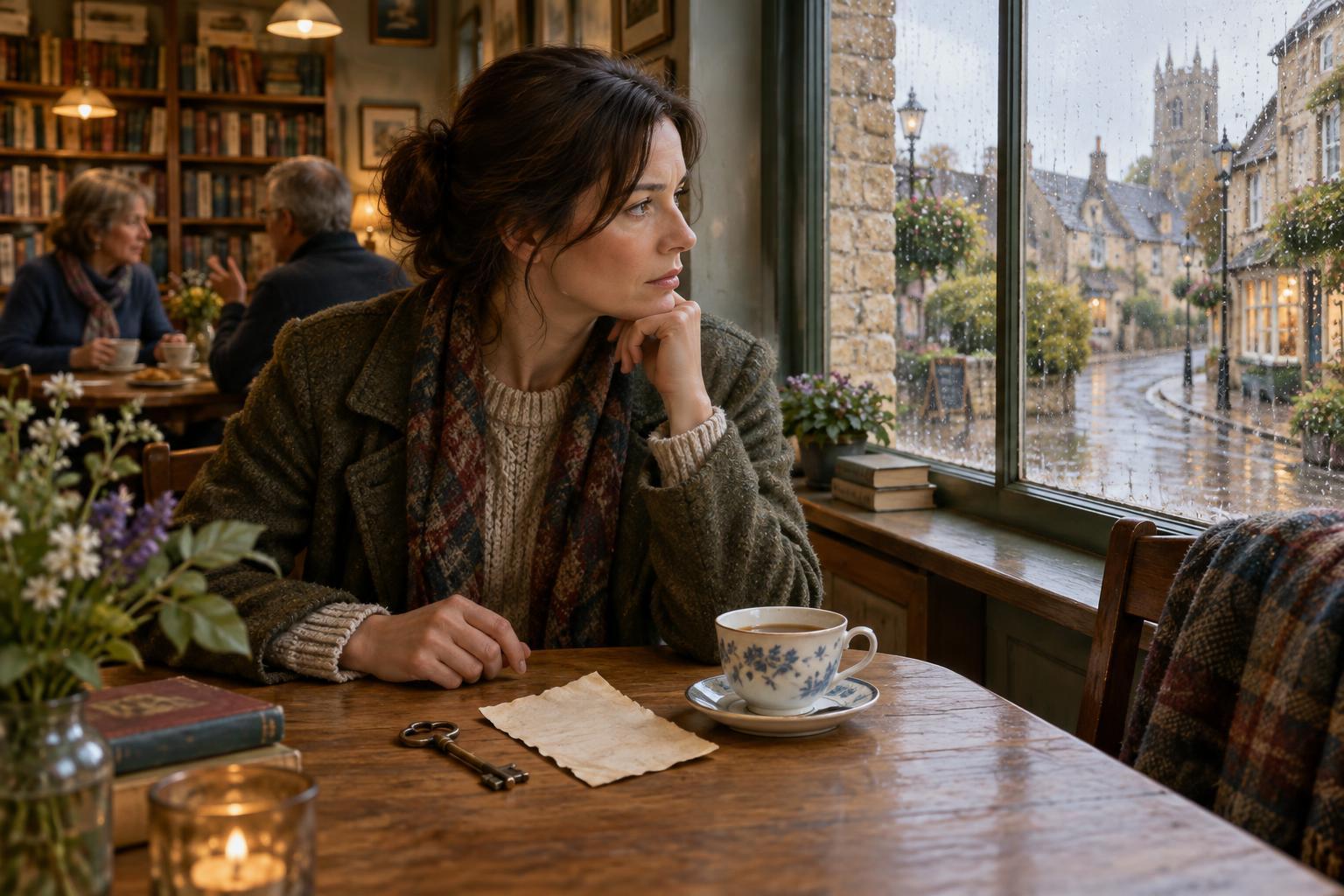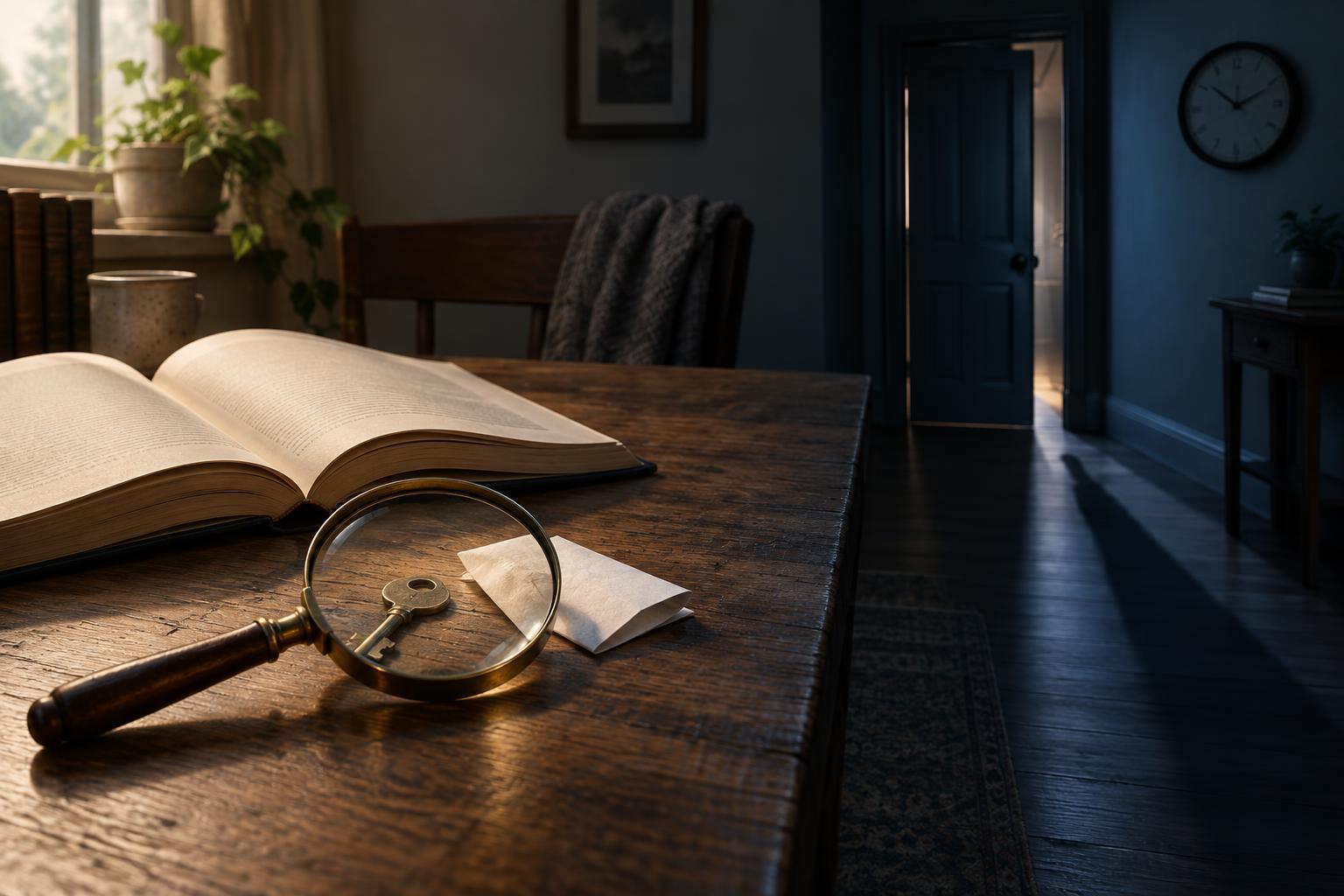
Two questions that keep readers turning pages
A locked room, a missing person and a hurried escape could belong to either a mystery or a thriller. The difference is not simply whether a story contains a crime, a chase or a surprising ending. It lies in what the reader is waiting to learn. A mystery often asks, “What happened, and who is responsible?” A thriller more often asks, “What will happen next, and can it be stopped?”
These are useful tendencies, not strict rules. A mystery can include immediate danger, while a thriller may revolve around an unsolved crime. Many novels use both forms of suspense. Still, noticing the central question helps explain why two books with similar plots can feel so different: one invites the reader to investigate, and the other urges the reader to brace for impact.
Mystery suspense turns on clues and interpretation
In a mystery, an important event has often occurred before the main investigation begins. Someone has vanished, an object has been stolen or a crime has been committed. The story moves forward as characters try to reconstruct that earlier event. Suspense comes from the gap between the available evidence and a convincing explanation. A detail that seems ordinary in one chapter may take on new meaning later.
This structure gives readers a particular pleasure: they can test their own theories against the investigator’s. A fair mystery does not have to make every answer obvious, but its discoveries feel more satisfying when readers can look back and understand how the pieces fit. Red herrings add uncertainty by offering plausible but incomplete interpretations. The tension is not only about finding a clue; it is about deciding which clues matter and what they mean.
Thriller suspense points toward a looming event
A thriller often places its characters under pressure from a threat that is active or approaching. The danger might be physical, but it could also involve exposure, betrayal or the collapse of something a character is trying to protect. Rather than mainly reconstructing the past, readers watch choices unfold under tightening constraints. They may know what the threat is before the protagonist does, or they may discover it alongside them.
Deadlines, narrow escapes and plans that go wrong are common ways to maintain that pressure. A scene may answer one question while creating a more urgent one: the character reaches safety, but the pursuer now knows where they are. Thriller suspense can therefore depend less on concealing a final explanation than on making the consequences of the next decision feel immediate. Even a quiet conversation can be tense if the reader knows what the speaker stands to lose.
Pacing and reader knowledge change the experience
Mysteries often make room for pauses: interviews, comparisons of accounts, returns to familiar places and moments when a character reconsiders an assumption. These pauses are not breaks from suspense when they give readers something to weigh. The pace can be brisk or leisurely, but the reader’s attention is drawn toward patterns and contradictions. A small inconsistency may be more exciting than an action scene because it changes the possible solution.
Thrillers tend to make delays feel costly. A character may have too little time to check a story, ask for help or think through every option. Short scenes and shifting circumstances can strengthen that effect, though a thriller need not move at full speed throughout. Slower passages can establish what matters to a character, making the next threat more meaningful. In either genre, suspense depends on controlling information: what the reader knows, what a character knows and when those two perspectives diverge.
How to read the overlap
Some stories begin as mysteries and become thrillers. An investigator might first ask who left a threatening note, then race to prevent the writer from acting. Others move in the opposite direction: after a dangerous encounter, a character must discover why they were targeted. The genre label describes an emphasis, not a guarantee that every chapter will work the same way.
For a book-group discussion, try asking where your sense of suspense was strongest. Were you eager to solve a puzzle, worried about an approaching threat or both? Which facts did you have that the characters lacked? Did a reveal change your understanding of earlier scenes, or did it make the next scene more frightening? Those questions can lead to a richer conversation than deciding which label belongs on the cover. They also make it easier to choose your next read based on the experience you want.