The same wonder, a different reading experience
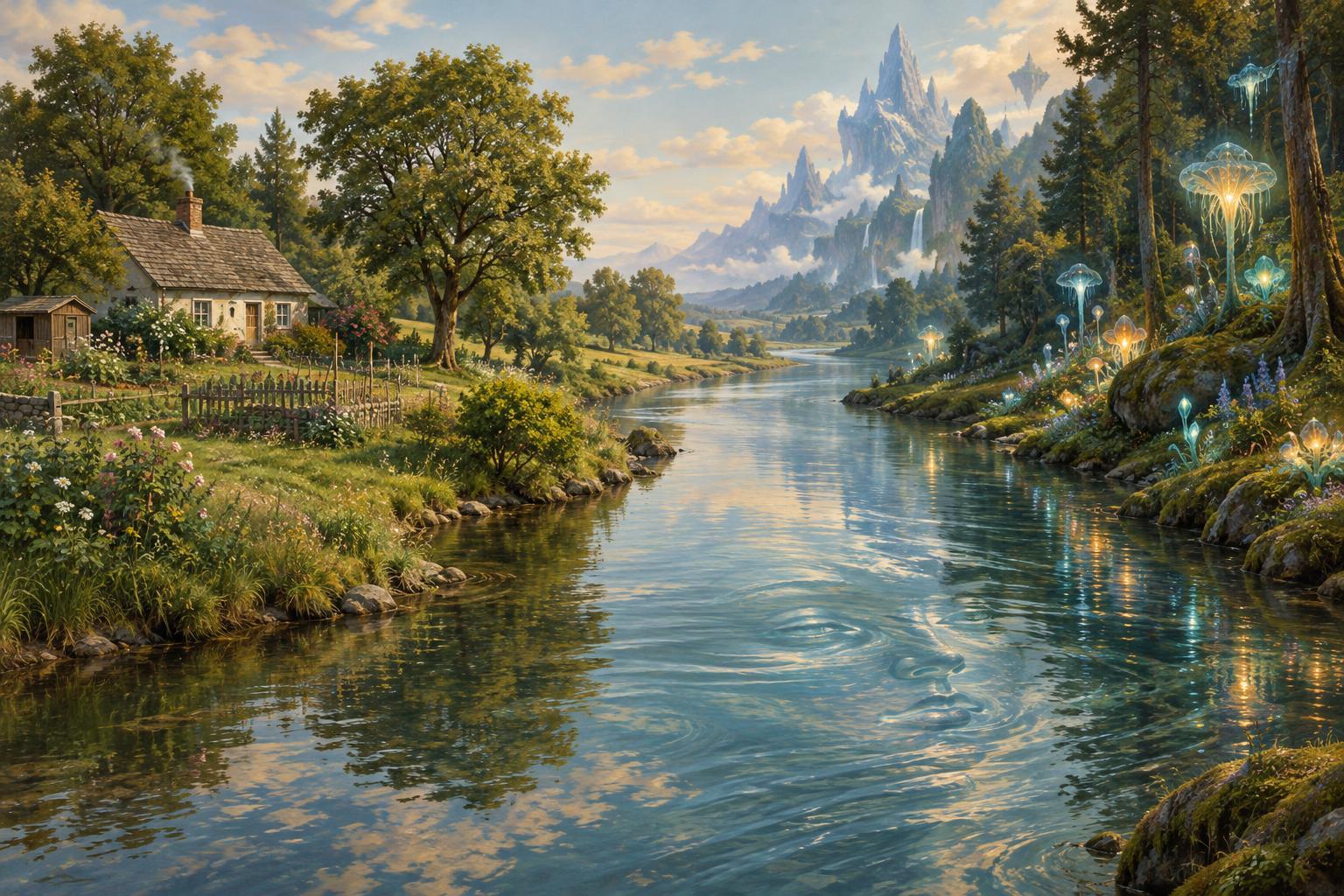
Imagine two stories in which a river speaks. In one, the river’s voice is part of an otherwise familiar town. People still go to work, argue over dinner, and remember what their grandparents told them. The narration offers no system of river magic to learn. In the other story, speaking rivers belong to a larger invented world, where their powers have limits and characters must understand those limits to complete a quest. Either story could be absorbing, but they invite different questions.
Magical realism generally places impossible events within a recognizable social reality and presents them with a matter-of-fact quality. Fantasy is a broader category in which the impossible can shape a story’s setting, conflicts, and possibilities. These are tendencies, not tests. Fantasy can be quiet and domestic; magical realism can be startling and expansive. A single unusual event does not settle a book’s genre.
Notice how the story treats the impossible
One useful distinction is how much explanation the story expects. A fantasy novel may establish rules for a spell, reveal the history of an enchanted place, or follow characters as they learn what magic can do. Those choices help readers anticipate consequences. In magical realism, an extraordinary event may receive no more explanation than a change in the weather. Its meaning can remain open even as its effects on daily life become clear.
Pay attention to the characters, too. Do they investigate the impossible as a puzzle, or fold it into their understanding of the world? Neither response belongs exclusively to one genre, but it changes the reader’s footing. When a character accepts a strange event without asking for proof, the story may direct our attention away from mechanics and toward memory, relationships, power, or loss.
Look beyond the setting
It is tempting to sort books by scenery: an invented kingdom must be fantasy, while a contemporary neighborhood with one impossible occurrence must be magical realism. Setting can offer a clue, but it cannot carry the whole distinction. Some fantasies unfold in ordinary kitchens and city streets. A work of magical realism may cover generations or move across many places while remaining grounded in recognizable histories and communities.
Instead, ask what holds the story together. Does the plot turn on discovering and using supernatural abilities? Does it leave a seemingly impossible family story unresolved while exploring what the family chooses to remember? A book can do both. Genre labels are most helpful when they describe the experience a work creates, not when they force every scene into a single category.
Why the distinction matters
For readers, a genre label is a promise about what kind of attention might pay off. Someone expecting an explained magic system may feel adrift when a novel declines to provide one. Someone expecting ambiguity may be disappointed when every mystery has a rule. Knowing the difference can help a book group move past “I didn’t get the magic” and ask whether the story wanted its magic to be understood in that way.
The label also shapes how we talk about culture. Calling an unfamiliar belief or storytelling tradition “magical” simply because it is unfamiliar to us can flatten the people and places in a book. Before applying a label, consider whose viewpoint the narration follows and what the story treats as ordinary. Genre vocabulary should help us read more closely, not turn another community’s ways of understanding the world into decoration.
A better question for your next book discussion
Rather than opening with “Is this really magical realism or fantasy?”, try asking what changes when the impossible enters the story. Who notices it? Who has the authority to explain it? What remains unresolved? These questions work whether the book fits neatly on a shelf or moves between traditions.
You can still use genre names. They help readers find books and give a group a starting point for comparison. Just hold them lightly. The most interesting difference may not be whether a river speaks, but whether the story asks us to map its powers, listen to its memories, or sit with the fact that its voice means something different to everyone on its banks.