Start with the experience, not a verdict
A title and a rating can help you remember what you read, but they rarely capture what it felt like to read it. A reading journal gives you room to notice where a book met you: what drew you in, what slowed you down and what stayed with you afterward. It does not need to be a polished review or a record of every book you finish.
Begin each entry with the basics you want to be able to find later, such as the title, author and when you read it. Then add one sentence about your experience. Were you eager to return to the book, or did you keep setting it aside? Did the ending change how you understood the beginning? Describing your response is often more useful than deciding whether a book was simply good or bad.
Record the circumstances around the book
The same book can feel different depending on when and how you read it. You might note whether you read a few pages each morning, listened while doing chores or shared chapters with someone else. If a busy week made it hard to concentrate, that context may explain a lukewarm reaction better than the book’s subject or style does.
You do not have to turn your journal into a diary. A phrase such as “read in short bursts” or “picked up after a long reading break” may be enough. These small notes can help you spot which formats, settings and routines make reading satisfying for you, without treating every unfinished book as a failure.
Collect questions, surprises and points of friction
Try writing down a question the book raised, even if you never answer it. In a novel, you might wonder why a character withheld information or how the story would change from another point of view. In nonfiction, you might note an idea you want to think through or a distinction that made a familiar subject seem less simple. Questions preserve your curiosity better than a quick summary of the plot.
It is also worth recording what did not work for you. A confusing opening, a voice you resisted or an argument you found unconvincing can lead to a more precise response than “I didn’t like it.” Leave room for your opinion to change, too. An entry written halfway through a book and a short note after the final page can show how your reading developed.
Notice connections without making an assignment of it
Books often call other books to mind. A setting may remind you of a story you read years ago; a poem may give language to a feeling you recognized in a memoir. Jot down those links, along with any memories or conversations the reading prompted. You are building a map of your own attention, not trying to prove that every book belongs to a grand theme.
For book groups, these notes can be especially handy. Instead of arriving with a complete interpretation, bring one scene you want to revisit, one question you would like others to weigh in on and one detail you noticed. A journal can help you participate while remaining open to readings different from your own.
Keep the habit small enough to continue
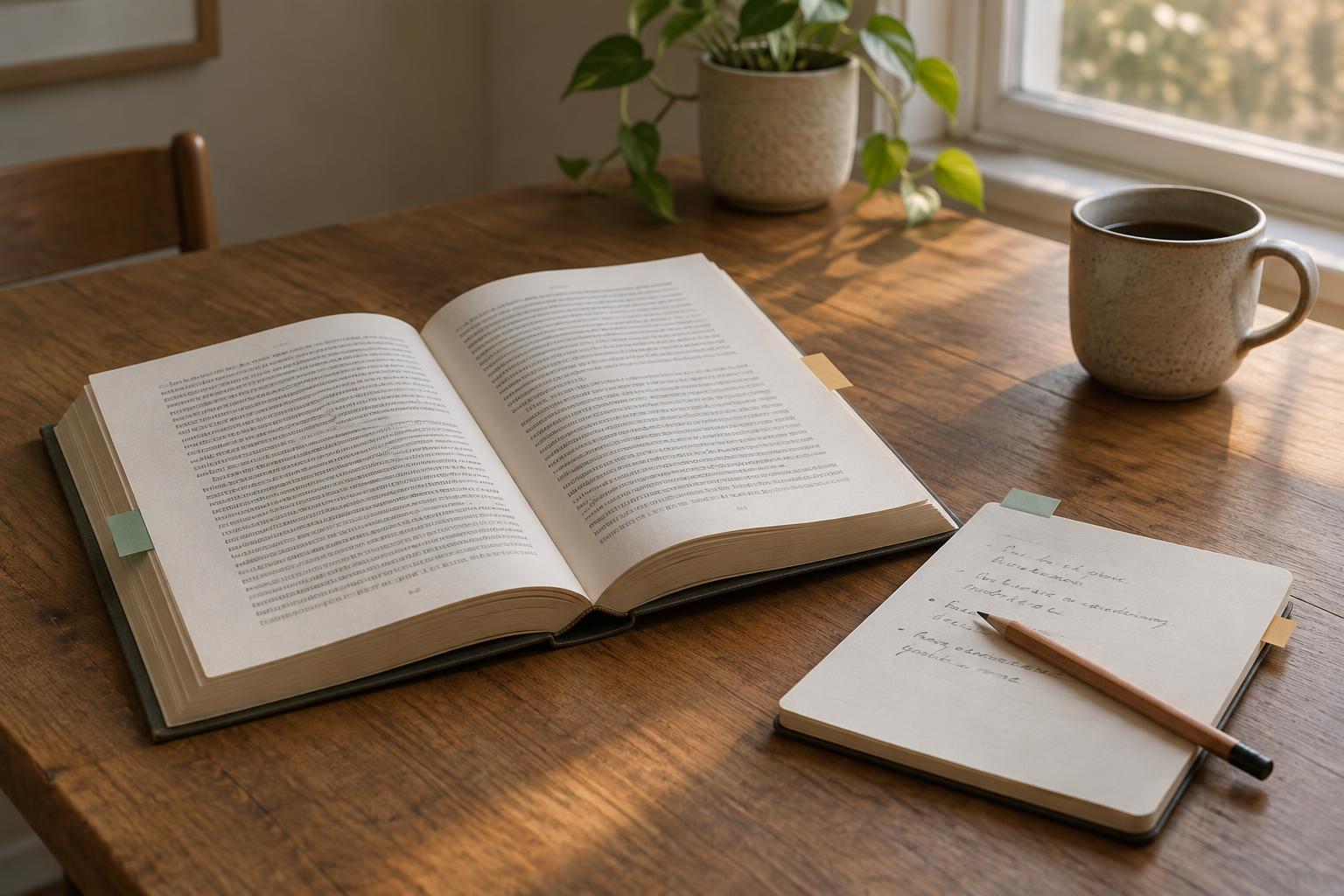
Choose a format you will actually use: a notebook, a simple document or brief notes kept with your reading list. An entry can be three lines. You might use recurring prompts such as “What lingered?”, “What surprised me?” and “What would I ask another reader?” If a passage matters to you, note its location and why you marked it, so you can find it again.
There is no need to catch up on every book you have ever read. Start with your next one, and let some entries be fuller than others. When you look back, pay attention not just to favorite titles but to patterns in your responses: the kinds of stories you seek out, the questions you return to and the books that became more meaningful with time. A useful reading journal is one you can return to, not one you have to keep perfect.