Start with the story, not a perfect map
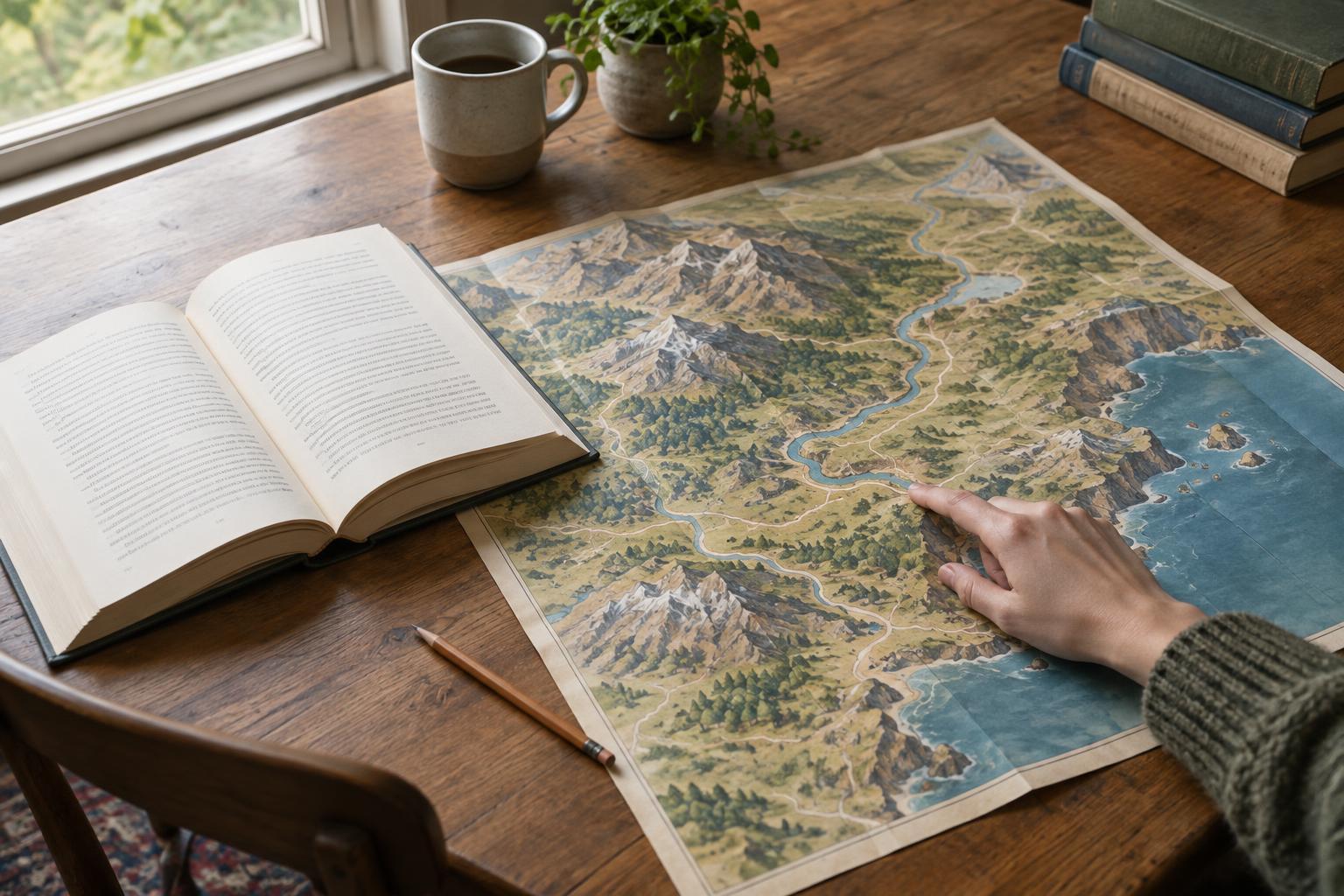
When a story takes place in a region you do not know, a map can give you a useful first foothold. It can show whether two towns sit near each other, where a river runs, or what lies between a character’s home and a destination. You do not need to identify every street to benefit. Start with a broad map and look for the few places the story returns to.
Keep a short list as you read: place names, landmarks and journeys that seem to matter. Separate real locations you can find from names you cannot. An unfindable town may be invented, renamed or too small for the map you have chosen. Rather than treating that as a problem to solve, ask what the story tells you about its relationship to nearby places. A fictional town can still feel grounded in a recognizable landscape.
Trace journeys without reducing them to mileage
A character’s trip often tells you more than its distance. Mark the starting point and destination, then notice what lies between them: a river crossing, a mountain range, a stretch of open country or a cluster of towns. These features may help you understand why a journey feels easy, exposed, isolating or momentous to the character. The story’s descriptions should guide that interpretation; the map supplies context, not a replacement for the text.
Pay attention to the way characters travel. The same route means something different on foot, by train or by car. Weather, available roads and a character’s resources can matter as much as straight-line distance. If a journey seems surprisingly quick or slow, note the question rather than assuming the writer has made an error. The pace may reflect what the narrative chooses to linger over, or the setting may not correspond exactly to a present-day map.
Look at borders, centers and edges
Maps can clarify relationships within a region. A capital or large town may draw people toward work, trade or family, while a smaller settlement may feel distant from those centers. A border can be a simple line on a map and a complicated presence in a story, shaping how characters think about belonging, travel or home. Notice which places characters describe as familiar and which they call far away. Their mental map may matter more than yours.
It also helps to change scale. A regional map can reveal the broad shape of a journey; a town map may help you follow repeated visits to a station, market or neighborhood. Do not assume that a map shows everything important. Family ties, memories, local names and community boundaries may be central to the story even when they are invisible on the page in front of you.
Make room for history and invention
If a story is set in the past, remember that a contemporary map may show roads, names or boundaries the characters would not have known. It can still help you orient yourself, but treat it as an approximate guide. Clues within the book—how long travel takes, where people gather, which routes they avoid—may give you a better sense of the world the characters inhabit.
Writers also compress distances, invent places and combine features of different locations. A map need not verify every detail for a setting to be meaningful. When the fictional geography differs from what you can locate, consider what that choice allows: a town might bring several kinds of landscape close together, or an unnamed place might keep the focus on its residents. The aim is to read more attentively, not to grade the story against an atlas.
Bring one map question to a discussion
For a book group or family conversation, choose one route or place that changed how you understood a scene. You might ask, “What does the trip away from home cost this character?” or “Who gets to move easily through this setting, and who does not?” Participants can compare the places they pictured before seeing a map with what they noticed afterward. Different impressions can open a conversation about the author’s descriptions.
Keep the map nearby, but let the story remain the center of attention. You may find that a bend in a river explains a route, or that no map can account for why a particular street feels like home. Both discoveries are useful. A map offers orientation; the people, language and choices in the story give that orientation meaning.