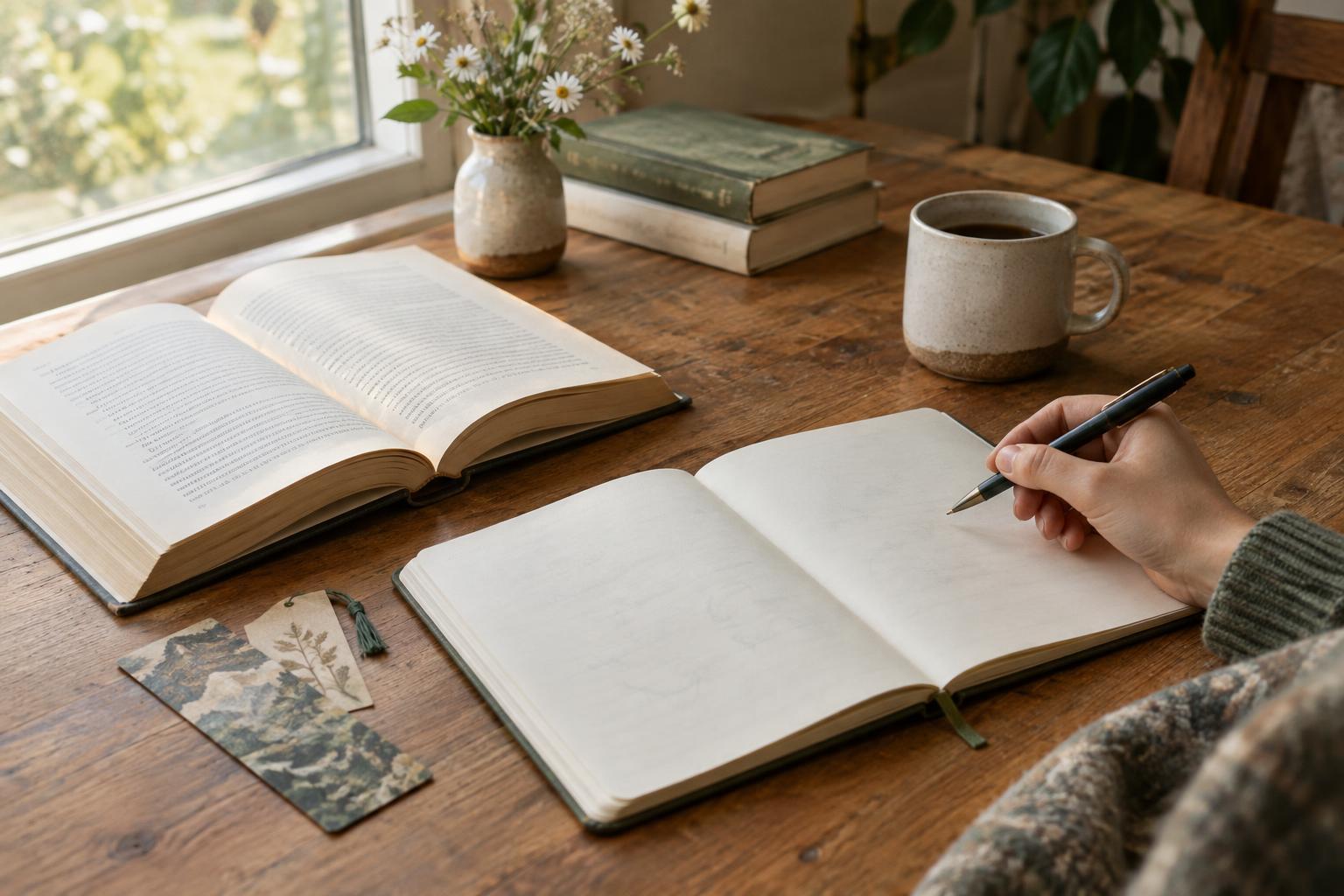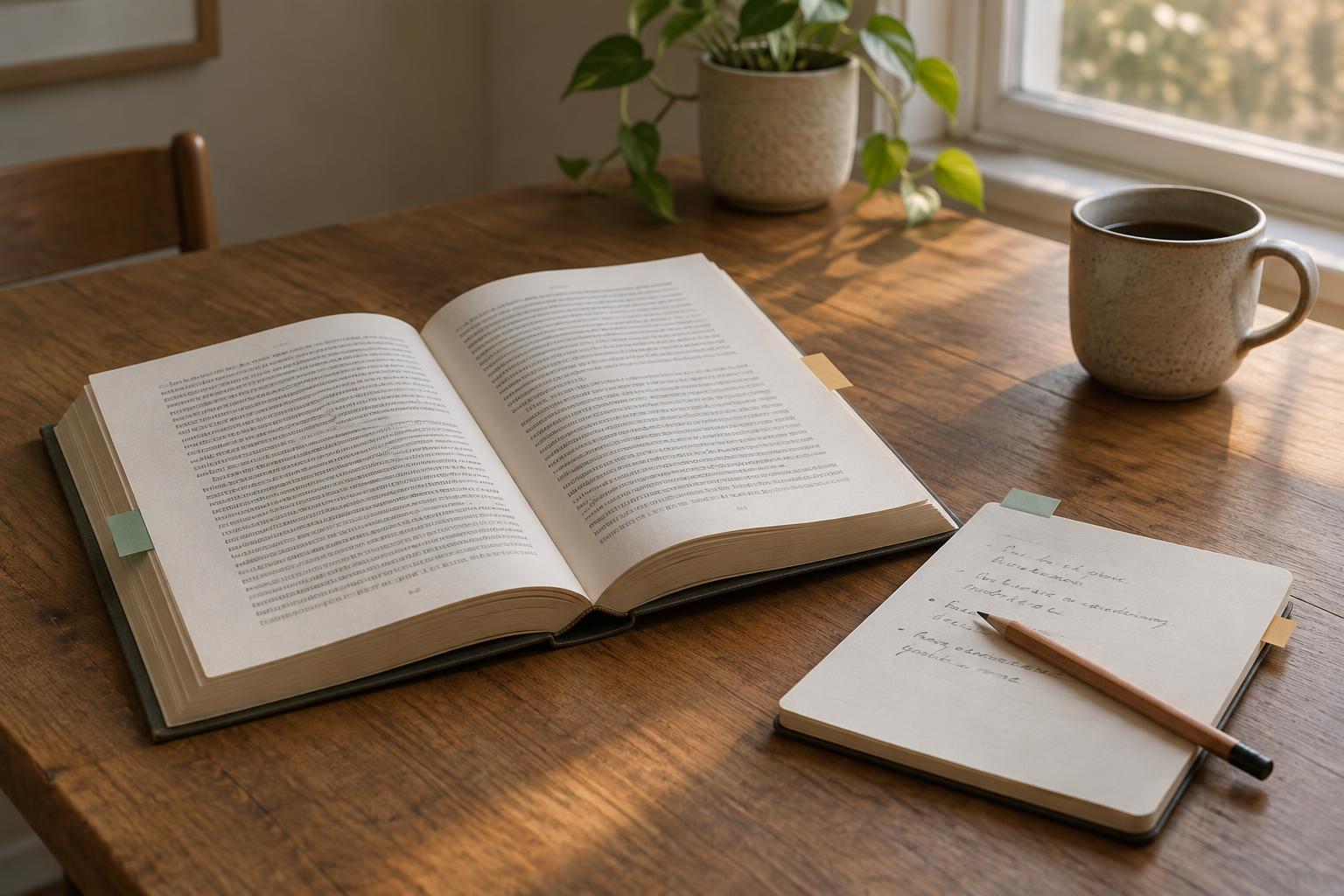
Decide what you want your notes to do
Before opening a notebook or notes app, ask why you are reading this particular book. You might want to understand a subject, prepare for a book group, improve a skill, or follow a question that has been on your mind. Your purpose can be modest. “I want to explain the central argument to a friend” is enough to guide what you record.
A purpose helps you resist the urge to save everything. If you are reading for an overview, focus on the main claim and the ideas that support it. If you hope to try a method, note its steps, any conditions the author attaches to them, and your own questions about putting them into practice. You can change your purpose as you read; write down the new one so your later notes make sense.
Keep a light record of the book’s shape
Start with the title, author, and a place to find the book or your copy again. Then, as you read, make a brief map rather than a chapter-by-chapter transcript. After a section, write one sentence describing what it contributed: a definition, an example, an objection, or a shift in the argument. These small summaries make it easier to see how the parts fit together.
Page numbers are valuable even when you do not copy a passage. A note such as “p. 84: example of the main idea in a workplace” gives your future self a route back to the text. For an ebook or audiobook, use the location or chapter information available to you. The goal is not a perfect citation system; it is a reliable way to relocate something worth checking.
Put the important ideas in your own words
When an idea seems important, pause and try to state it without looking at the page. You might use a simple pattern: “The author argues that… because…” If you cannot finish the sentence, reread the relevant passage and try again. This is often more revealing than highlighting another paragraph, because it shows where your understanding is still thin.
Keep the author’s point separate from your response to it. Labels such as “Author’s claim,” “Example,” and “My thought” can prevent confusion later. For instance, your note might say, “Author’s claim: routines reduce the number of daily decisions. My thought: would this hold for people with unpredictable schedules?” That question is useful even if you never answer it; it records how the book met your own experience.
Copy exact wording only when the phrasing itself matters or you may want to discuss it. Put quotation marks around those words and record where they appear. Otherwise, paraphrasing usually produces shorter notes that are easier to understand when the book is no longer in front of you.
Record questions, not just conclusions
Nonfiction can sound convincing while you are immersed in it. A few questions can give you room to think. What does the author mean by a key term? What evidence or examples are offered? Does a conclusion go beyond what those examples show? Is there a perspective you would like to hear alongside this one? You do not need to investigate every question immediately. Mark the ones that would change your understanding.
It also helps to note your level of confidence. “I understand this but disagree,” “I need to reread this,” and “I would like another example” describe different responses. If you are taking notes for a book group, these distinctions can lead to better conversation than a list of passages you liked or disliked.
Finish with a short review you will actually use
At the end of a reading session, spend a minute choosing the two or three notes most worth keeping. At the end of the book, write a brief summary of its central argument, one idea that changed or sharpened your thinking, and one question that remains. This final note is a useful entry point when you return months later.
Make your system easy to maintain. One notebook, a single document per book, or notes tucked inside a reading journal can all work. Consistent headings and page references matter more than elaborate formatting. Your notes have succeeded if they help you recall the book accurately, find a passage when needed, and carry a worthwhile idea into your next conversation or reading choice.