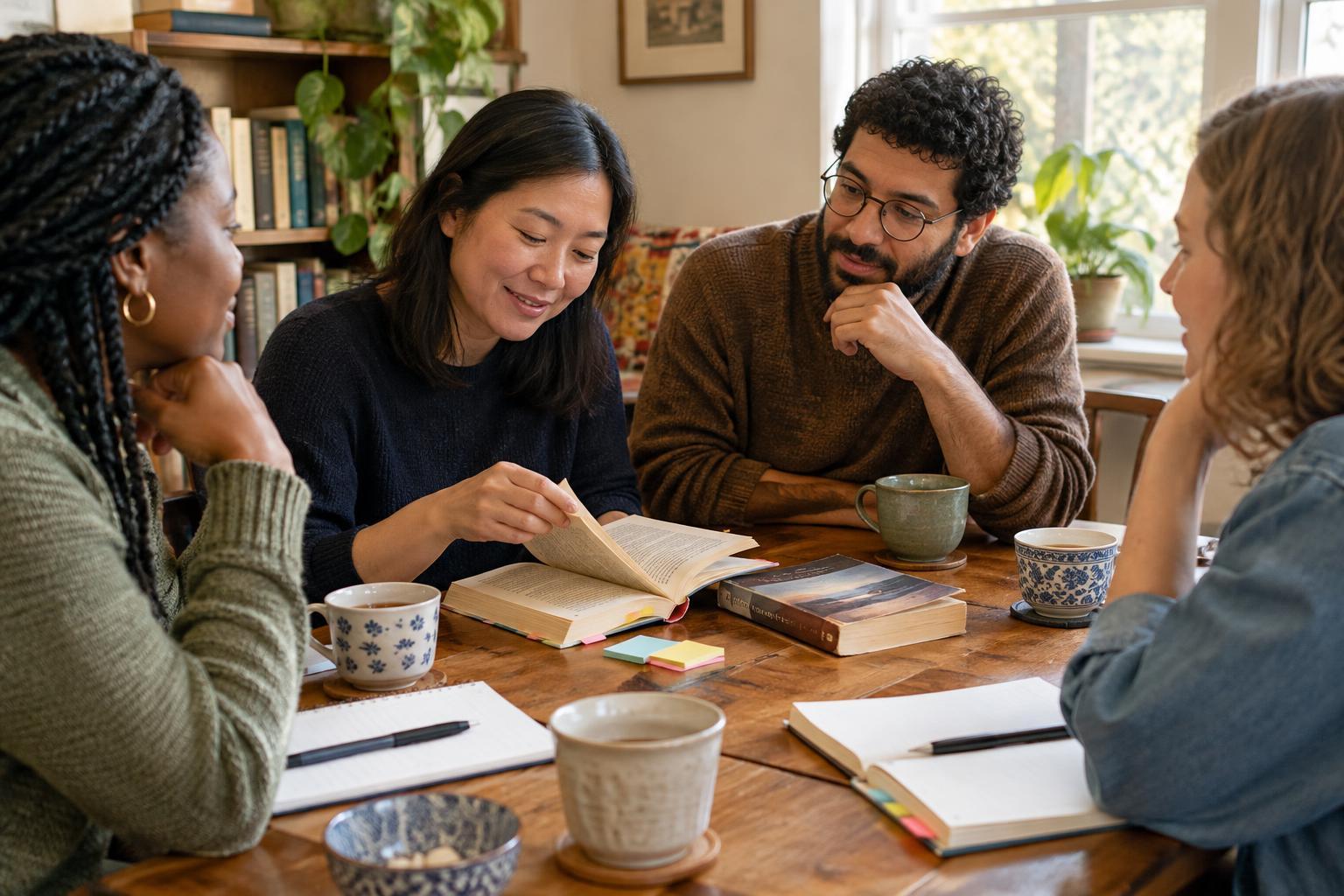
Choose a book with room for a second conversation
A reread can give a book club a different kind of meeting. Instead of wondering only what happens next, members can notice how the story creates its effects: which details gain meaning later, whose perspective shapes a scene, and where their sympathies shift. It can also be interesting to discover that a book once loved no longer works for everyone. The goal is not to prove that an earlier opinion was right, but to make space for a new one.
Choose a book that offers more than a memorable ending. A layered narrator, a complicated relationship, or a setting that rewards close attention can give members something to examine on a second pass. Before deciding, ask who has already read the book and whether anyone would be reading it for the first time. A reread should still feel like a welcoming book club choice, not an inside conversation for longtime fans.
Give members a fresh way in
When announcing the selection, explain why the club is returning to it. You might be curious about a character who seemed minor before, the way the opening prepares readers for the ending, or a question the group never resolved. Offer one or two optional reading prompts rather than a long assignment. Members could mark a passage that reads differently now or note a moment they want to discuss with someone encountering the book for the first time.
Avoid asking everyone to reconstruct their original reaction in detail. Some people will remember it clearly; others may recall only a general feeling, and first-time readers have no earlier reaction to report. A simple note-taking suggestion can work for all members: write down one expectation you formed while reading, one moment that challenged it, and one question you would like to put to the group.
Start with the book as it reads today
At the meeting, begin with present impressions before inviting comparisons with the past. Ask what held each reader’s attention this time, which scene they would bring to another reader, or where they felt uncertain about a character’s choice. This gives first-time readers an equal place in the opening conversation. It also prevents a chorus of “I remembered this differently” from becoming the only way to participate.
Once everyone has had a chance to speak, turn to changed impressions. Rereaders can describe a shift without treating memory as evidence of what the book definitively means. Someone might say, “I used to find this character reassuring, but this time I noticed how often they interrupt others.” A first-time reader may see the same behavior differently. That contrast is useful discussion material, not a disagreement the club needs to settle.
Look closely without turning the meeting into a quiz
Rereads lend themselves to close attention, but a club does not need to test who caught the most clues. Invite members to find a short passage that illuminates a larger question. How does the wording affect the mood? What does the narrator know, and what might they be overlooking? Does a later scene alter the meaning of an earlier one? Keeping the conversation tied to a few passages helps everyone follow along, including members who did not annotate their copies.
It can also help to distinguish a deliberate detail from a connection a reader personally makes. Both may be worth discussing, but they lead to different questions. If someone sees an image repeated throughout the book, the group can look at where it appears. If someone associates that image with an experience outside the story, the group can ask how that association shaped their reading. Neither contribution requires everyone else to reach the same conclusion.
End with what the reread changed—and what it did not
Reserve the last part of the meeting for a broader reflection. Did returning to the book deepen anyone’s appreciation, complicate it, or leave their view mostly intact? First-time readers can answer a parallel question: would they want to revisit this book someday, and what might they look for? These questions let members leave with different judgments while still recognizing what they learned from the conversation.
A reread does not have to become a regular club tradition. Afterward, ask whether the experience offered something your usual selections do not. If it did, the group might occasionally revisit an old favorite or choose a book that some members know and others do not. The best reason to reread together is simple: the conversation has somewhere new to go.