Start with the trip you actually take
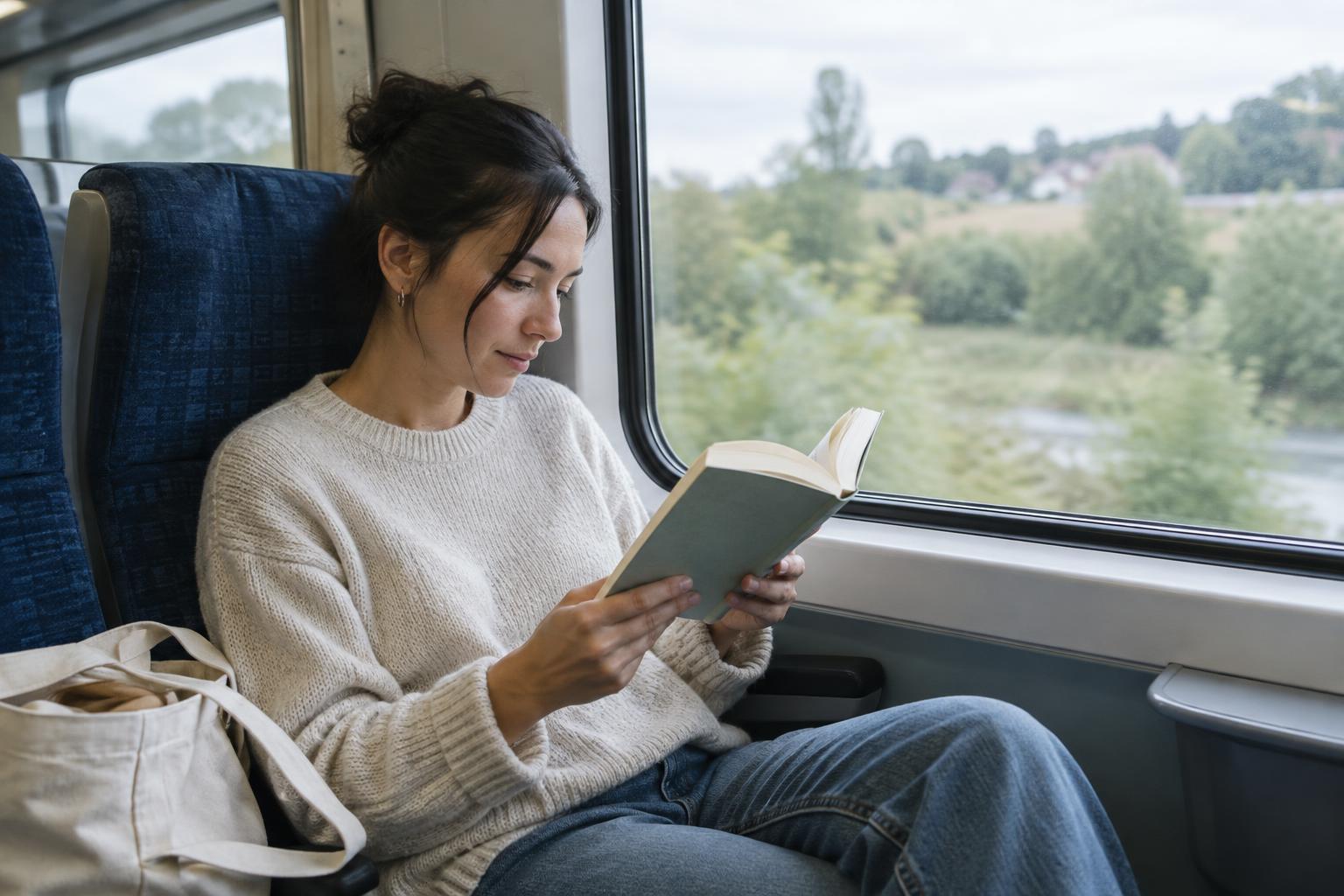
A commute can look like uninterrupted time on a train, a crowded bus ride with frequent stops, or a drive that leaves no room for a printed page. Travel brings its own variations: waiting at a gate, sitting beside family, or arriving too tired to concentrate. Rather than deciding to “read more” in the abstract, notice where your trip offers a comfortable, safe pocket of attention. Five settled minutes may be more useful than an hour spent repeatedly putting a book away.
Match the format to that pocket. A paperback is easy to open when you have a seat and enough light. An ebook can help when bag space is limited or you want to adjust the text size. An audiobook may suit a walk or a drive, provided you can still give your surroundings and the road your full attention. If a route demands constant decisions, save the story for another part of the day.
Make the next page easy to find
A reading plan is more likely to survive a busy morning when it requires little preparation. Keep one book in the bag you usually carry, or download an ebook or audiobook before a trip so that a weak connection does not determine whether you can begin. A bookmark, comfortable headphones, or a charged device can remove small obstacles. You do not need to pack a stack of choices; one appealing option is often enough.
If you tend to reach for your phone during a short wait, decide in advance what you would like to read instead. Place the book where you can reach it without unpacking everything, or leave the ebook open to your current page. The goal is not to forbid other ways of passing time. It is to make reading an available choice before the moment disappears.
Choose books that can travel with you
Some books welcome frequent pauses. A collection of essays, short stories, poems, or brief chapters can give a satisfying stopping point before your station arrives. A plot-heavy novel may work just as well if you have a regular stretch of quiet time. Think about what helps you return after an interruption: a strong narrative voice, a familiar subject, or chapters whose openings quickly bring you back into the story.
You can also keep two books in progress for different situations. One might be an absorbing read for a long journey; the other, something you can open while waiting for a connection. This is not a rule about finishing books efficiently. It is a way to avoid asking one title to fit every mood, noise level, and length of break. If reading in a moving vehicle makes you uncomfortable, leave the print book for stationary moments.
Use a small cue instead of a strict target
Travel rarely follows a perfect schedule, so a cue can be kinder than a page goal. You might open your book once you are seated, listen to an audiobook after you begin your walk, or read while waiting for boarding to start. Repeating a simple cue makes it easier to remember the book without turning a delay or a missed connection into a failed reading day.
Give yourself permission to stop at a natural point, even if you have read only a paragraph. On some trips, conversation, rest, or watching the landscape will be more welcome. Leaving room for those choices helps reading remain a pleasure. If you want to remember a thought for later, jot down a few words when it is convenient rather than trying to capture every detail on the move.
Let the trip become part of the reading life
A book read in fragments can still stay with you. A character may come to mind on the walk from the stop, or a line from an essay may give you something to bring to a book-group conversation. When traveling with others, sharing what you are reading can be an invitation rather than a demand for everyone to read together. A quick exchange about a scene or a question may be enough.
The most useful travel reading habit is one you can adapt. Keep a book close, choose a format that suits the journey, and notice when your attention is available. Over time, those ordinary openings can become a dependable place for reading, without requiring every commute or trip to be productive.