Start with a place you can actually use
A distraction-resistant reading space does not have to be a dedicated room. It can be one end of a sofa, a kitchen chair after dinner, or a corner of the bedroom. The best spot is one you can return to without moving piles of things or negotiating for space every time. Before rearranging furniture, notice where you already tend to open a book. That habit may tell you more than an ideal picture of a reading nook.
Choose a place that suits the kind of reading you want to do. A chair near household activity might be pleasant for a magazine or a few pages of fiction. A quieter seat may work better for a dense novel or a book you plan to discuss with a group. If several people share your home, your reading spot may need to change by time of day. Consistency helps, but flexibility can keep the habit alive.
Make comfort simple and practical
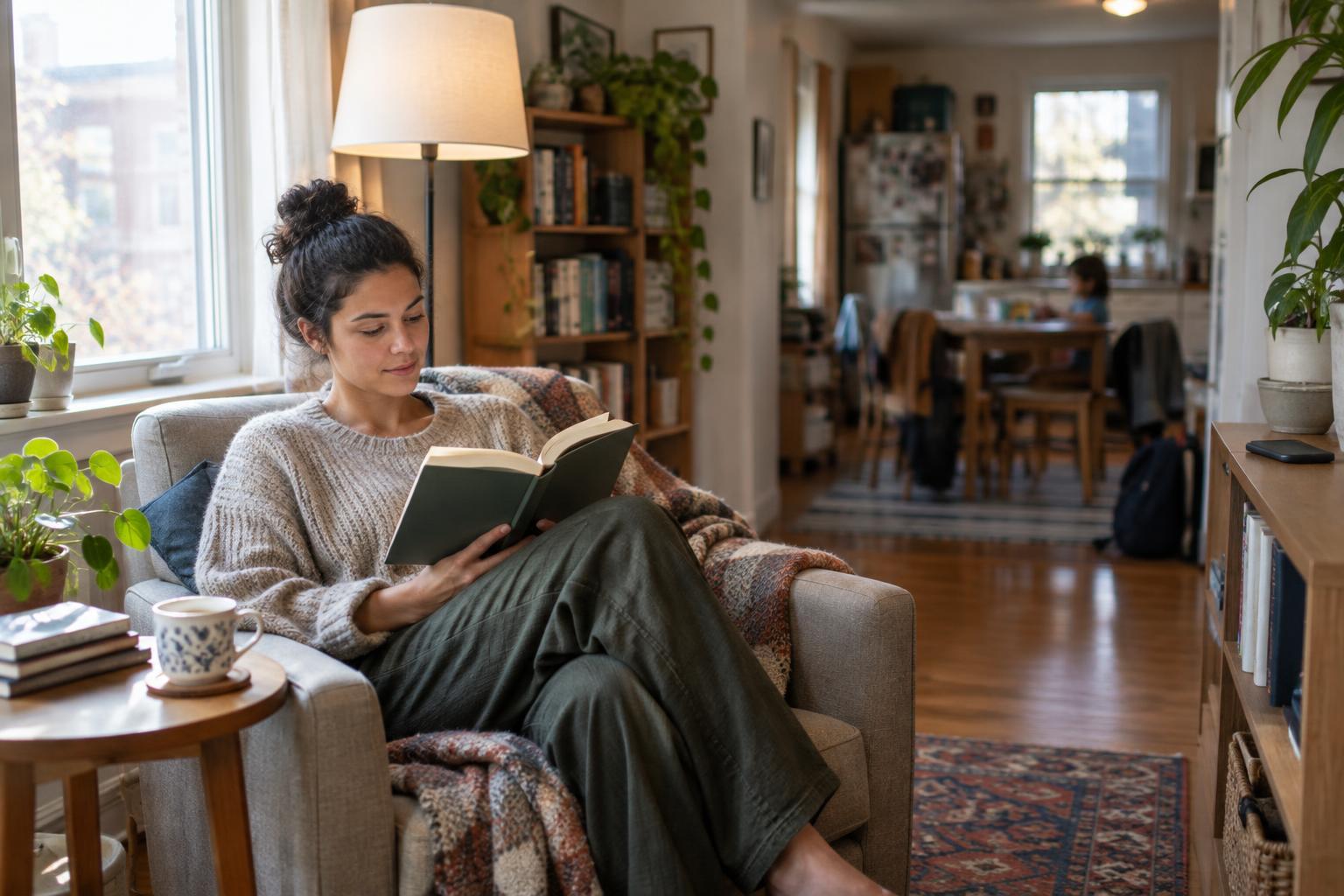
A space is easier to return to when you can sit comfortably and see the page without effort. Try the seat you already have before buying anything. A cushion, a footrest, or a nearby surface for your book and glasses may solve a small irritation. If you read in the evening, place a lamp where it lights the pages without shining into your eyes. For daytime reading, adjust your position if window glare makes the page hard to see.
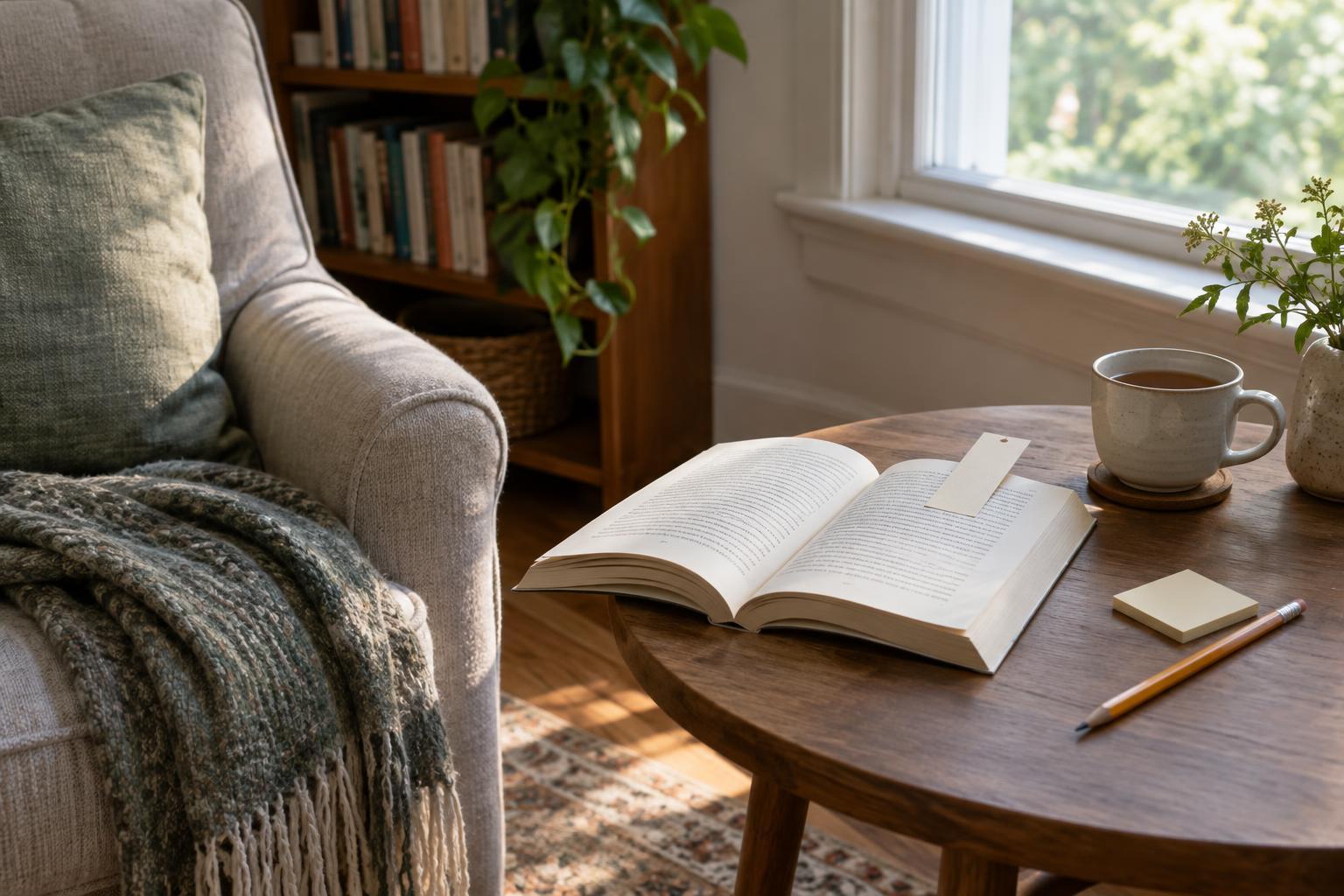
Keep a few useful items within reach, but resist turning the space into a storage area. A bookmark, a pencil for notes, and a place to set a drink may be enough. If you read several books at once, give the current ones a small shelf or basket. The goal is not to create a perfect display; it is to make opening a book feel like the easiest next step.
Give distractions somewhere else to go
The most useful change may be deciding what will not sit beside you. If a phone repeatedly pulls you away from a chapter, put it across the room or silence nonessential notifications for a short reading period. You do not need to make yourself unreachable: choose a way for important calls to get through if that matters in your household. A television can be harder to ignore than a phone, so consider reading in another room or at a time when it is off.
Not every distraction is digital. Unfinished chores can be just as loud in your mind. Before you sit down, write a brief reminder of anything you are afraid you will forget, then leave the list nearby or in another room. This will not remove every interruption, but it gives you a way to return your attention to the page instead of mentally rehearsing the task.
Work with the people who share your space
In a busy home, quiet often has to be arranged rather than found. A simple signal, such as sitting in a particular chair with a book, can help others recognize that you are taking a reading break. It is still worth saying what you need: perhaps twenty minutes without casual interruptions, with the understanding that urgent needs come first. Clear, modest requests are often easier for everyone to honor than an open-ended demand for silence.
Reading can also coexist with other people's activities. A child drawing at the same table, a partner working nearby, or a family member reading a different book may make the space feel companionable rather than isolated. If a perfectly quiet stretch is rare, plan for shorter sessions. A few pages in a space you can use regularly may be more satisfying than waiting for an uninterrupted afternoon that never arrives.
Let the space evolve with your reading
Once you have tried a spot for a week or two, pay attention to what interrupts you most. If your seat is comfortable but you keep getting up to find a book, change where the books live. If the light works in the morning but not at night, add a lamp or shift your reading time. Small adjustments are easier to sustain than a complete room makeover.
Your space can change with the season, the household, or the book. You might read a lively short story in a shared room and take a slower novel to a quieter corner. What matters is having a workable invitation to begin: a book you want to read, a place to sit, and fewer obstacles between you and the first page.