Begin with the story on the page
A story set in a familiar town, landscape, or neighborhood can prompt an immediate reaction: “That’s exactly how it was,” or “That’s not the place I knew.” Both responses are worth hearing. Before comparing memories, though, give the group a few minutes with the story itself. Ask which details establish the setting, whose point of view shapes it, and what the writer leaves out. This gives everyone a shared starting point, including readers who have never been to the place.
It also helps to name what kind of story you are reading. A fictional narrator does not have to speak for every resident. A memoir offers one person’s recollection, not a complete record. Even a story that names real streets may combine events or focus on a narrow period. Discussing those choices does not diminish anyone’s memory; it makes room to ask what the writing is trying to show.
Invite memories without making them a test
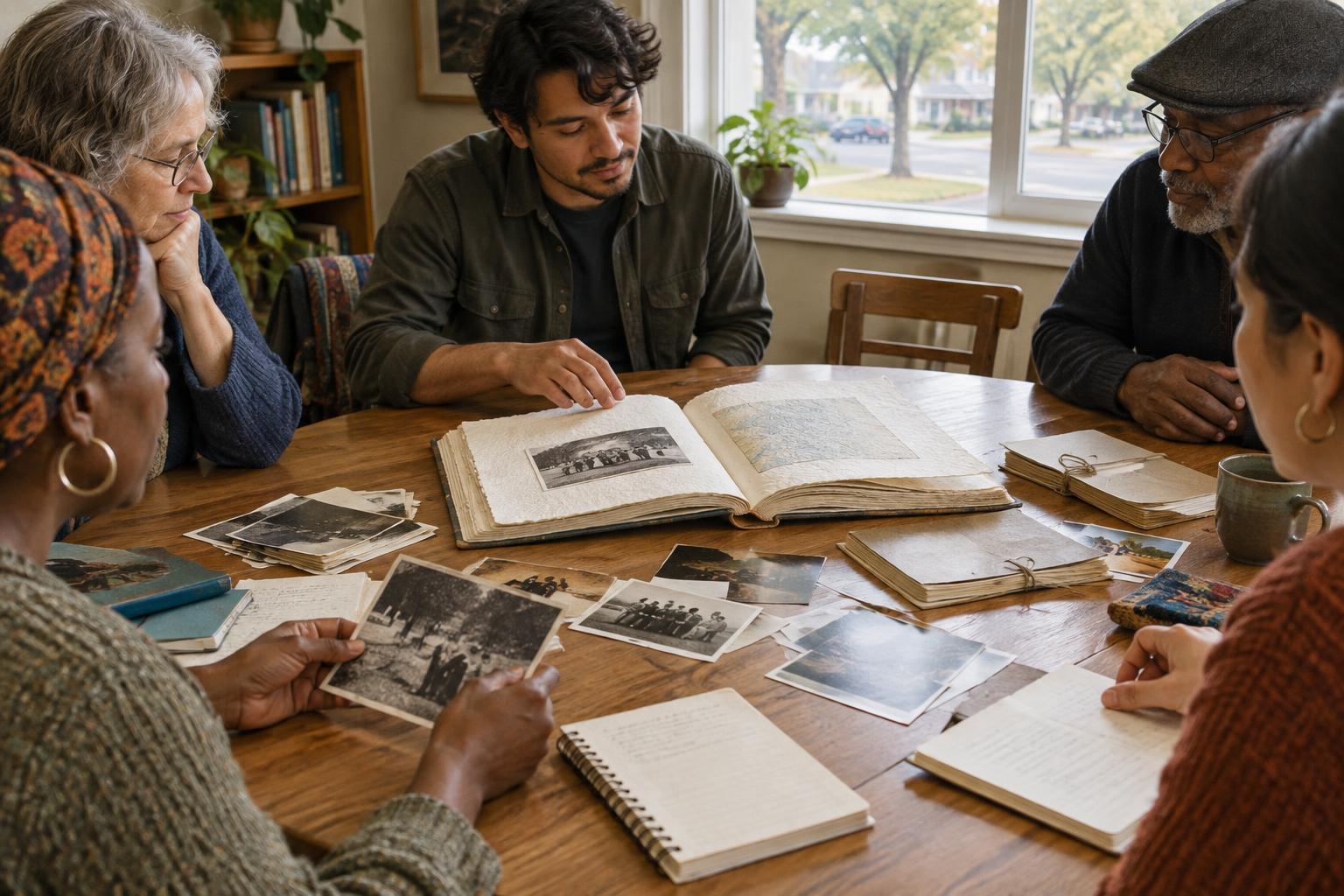
When neighbors disagree about a place, it is tempting to decide who has the most accurate account. Sometimes a factual question matters, but many differences begin elsewhere. Two people may have lived on the same block in different decades, worked different hours, or felt welcome in different spaces. Try asking, “When did you know this place?” and “What part of it did you spend time in?” Those questions can reveal why memories diverge without turning the discussion into a contest.
Let people choose how much to share. A reader might recognize a storefront but not want to explain a difficult family connection to it. Another may prefer to speak about the writing rather than offer a personal account. A useful invitation is, “If you have a memory that changes how you read this scene, you’re welcome to share it.” Silence should be an acceptable answer.
Notice whose version feels familiar
A regional story often relies on details that seem ordinary to some readers and surprising to others: a seasonal routine, a local phrase, or the way a particular building was used. Ask who might recognize those details and who might have encountered the same place differently. A town’s main street, for example, may appear in one person’s memory as a gathering place and in another’s as somewhere they rarely had reason to go.
This is not a request for one neighbor to explain an entire community. Instead, consider the limits of each perspective, including the narrator’s. Who gets to move freely through the setting? Who is mentioned only in passing? Whose work keeps the place running? Readers can explore those questions using the text, while remaining open to experiences the story does not contain.
Handle corrections and strong feelings with care
A reader may point out that a route, custom, or building is described differently from how they remember it. Rather than dismissing the correction or letting it take over, separate three questions: What does the story say? What does this reader remember? How does the difference affect our reading? The group may not be able to settle the factual question, and it does not need to pretend it has.
If a memory carries grief, pride, or frustration, acknowledge its weight without asking the speaker to defend it. A discussion leader can slow things down with a simple observation: “We seem to have two experiences of this place, and both matter to this conversation.” If the exchange becomes personal, return to a specific passage or take a pause. Respectful disagreement is possible; an argument over who belongs is not a requirement of good literary discussion.
Close with a fuller, not final, picture
Near the end, ask what each reader notices now that they missed at first. Perhaps a remembered sound makes a scene more vivid. Perhaps a neighbor’s account reveals that the story’s familiar landmark was not familiar to everyone. Keep those insights alongside the author’s choices rather than treating them as replacements for the text.
A regional story rarely settles what a place means. It can, however, give neighbors a way to speak about change, attachment, and difference with more precision. The most useful outcome may not be agreement. It may be leaving with a clearer sense of which memories shaped your own reading and a greater curiosity about the ones you had not heard.