A route is a way of seeing a place
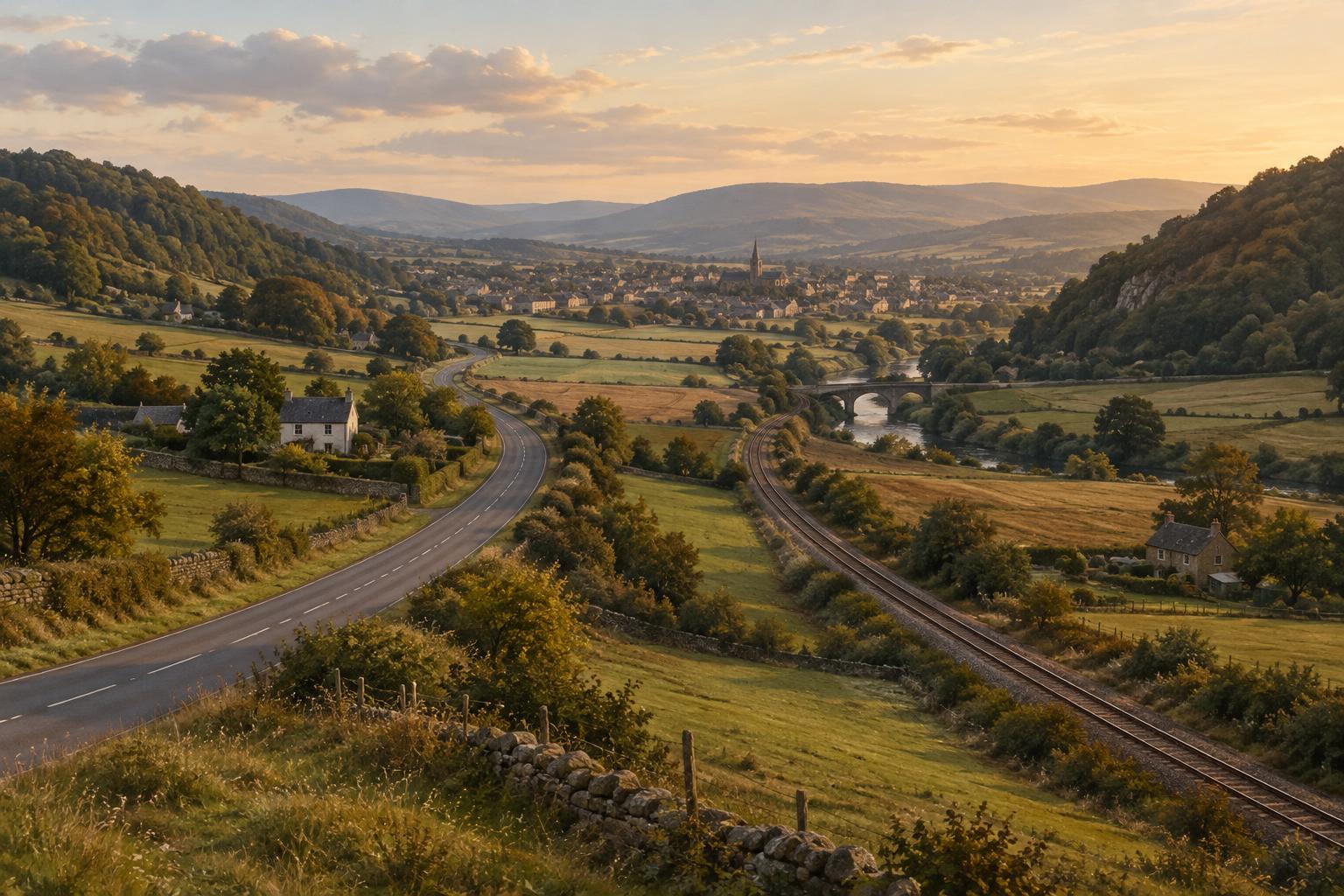
In a regional story, a road or railway can act like a line drawn through a map of relationships. It links homes, workplaces, shops and neighboring towns, but it also determines what a character sees along the way. A drive past empty storefronts tells a different story from a walk along a busy main street. A train window frames the landscape differently from a bicycle ride on a side road.
Routes give writers a practical way to make place matter without pausing to describe it all at once. The condition of a road, the distance between stops or the sound of a passing train can enter a scene as part of a character’s ordinary experience. For readers, these details offer clues about how people move through the region and what movement costs them in time, effort or attention.
Distance changes relationships
The same number of miles can feel short to one character and daunting to another. Someone with a reliable car may think little of an evening trip to visit family. Someone who depends on a ride may need to plan around another person’s schedule. Weather, work hours and the purpose of the journey can also change how far away a place feels.
This makes transportation useful for stories about family and community. A character who takes the familiar road home every weekend may feel closely tied to a place they no longer live. Another may remain nearby but seldom cross town. When a railway carries people past a community rather than into it, it can suggest a different kind of distance: being visible on a route while feeling disconnected from its destinations. Such contrasts help a narrative show belonging through action rather than explanation.
Routes hold memories of change
Roads and railways can carry several versions of a place at once. A character may know a road by the landmarks that used to stand beside it. An older relative may remember when a crossing was central to daily life, while a younger person knows it mainly as a place to wait. Neither memory needs to be treated as the definitive account; their differences can become the heart of the story.
Changes to a route can also make broad shifts feel personal. A bypass might make one trip easier while drawing travelers away from a familiar street. A disused track might become a shortcut, a boundary or a reminder of work that has changed. Writers need not turn these details into a lesson about progress or decline. Asking who benefits, who adjusts and who still uses the old way often produces a more textured picture.
A line on a map is not the whole community
Travel corridors can tempt a writer to describe a region as a sequence of sights glimpsed from a vehicle. That view has its place, especially for a newcomer, but it cannot show everything. People who live beside a road do not experience their homes only as scenery for passersby. Their routines may follow smaller paths: a walk to a neighbor’s porch, a turn toward a school or a trip that never reaches the highway.
A fuller regional narrative pays attention to who gets to travel and who is expected to stay put. It can notice the difference between a route that appears open and one a character can actually use. It can also let residents disagree about what a road or railway means. For one person, it promises escape; for another, it brings visitors, noise, work or a welcome connection. Those meanings can coexist.
Use the journey to reveal the character
For writers, a useful exercise is to give two characters the same destination and let them take different routes. What does each choose to avoid? Where do they slow down? Which landmarks do they name, and which do they barely notice? The answers can reveal habit, history and desire without requiring a long account of either character’s past.
Readers and book groups can ask similar questions of a finished story. Why does a particular journey occur on the page rather than between scenes? Does the route bring people together, mark a separation or change how someone understands home? Roads and railways are most interesting when they do more than establish where events happen. They help show how a place is lived in, remembered and imagined by the people moving through it.