Two ways to make the familiar feel strange
Horror and Gothic fiction are close relatives, not opposing categories. Both may feature a threatening house, an unexplained sound, or a character who cannot trust what they see. The difference is often one of emphasis. Horror places fear near the center of the reading experience: What is happening, what might happen next, and can anyone escape it? Gothic fiction often lets fear grow out of an atmosphere of secrecy, isolation, and unease. Its question may be less “What is in the room?” than “What has this room been hiding?”
These are useful reading guides, not strict rules for sorting books. A Gothic novel can be terrifying, and a horror story can be quiet, reflective, and rich in atmosphere. Looking at how a work creates tension is usually more revealing than trying to assign it a single label.
Fear: immediate danger and lingering dread
Horror can bring a threat into sharp focus. A character hears footsteps behind them, finds evidence of an intruder, or realizes that an ordinary object is behaving impossibly. Even when the source of danger stays hidden, the story may organize scenes around anticipation, confrontation, and the consequences of fear. Readers are encouraged to ask what the threat can do and how the characters will respond.
Gothic fiction commonly favors dread that accumulates. A family refuses to discuss a locked wing of a house. A portrait seems to carry more weight than anyone will admit. A visitor senses that the rules of a household were established long before they arrived. The danger might become physical, but the discomfort also comes from uncertainty, repression, or an unresolved past.
Neither approach requires the supernatural. A story about a human threat can be horror; a story with no confirmed ghost can feel deeply Gothic. To notice the distinction, pay attention to your questions as you read. Are you chiefly bracing for an encounter, or wondering why everyone avoids speaking plainly?
Atmosphere: what the story lets you know
Atmosphere is more than a collection of shadows and storm clouds. It comes from the details a writer chooses, the information they withhold, and the pace at which a character understands their surroundings. Horror may use a sudden interruption to turn a safe scene dangerous. It can also stretch a tense moment until even a routine action, such as opening a door, feels risky.
In Gothic fiction, unease often settles over many scenes rather than arriving all at once. Repeated images, strained conversations, and gaps in a family history can make a setting feel emotionally charged. A character may sense that something is wrong without knowing whether the cause is supernatural, social, or psychological. That ambiguity gives ordinary details room to become disturbing.
The same creaking staircase could serve either tradition. In a horror story, it might announce that someone is climbing toward the protagonist. In a Gothic story, it might remind the protagonist of a person the household insists is gone. The sound does not determine the genre; its relationship to expectation and memory does.
Setting: more than a backdrop
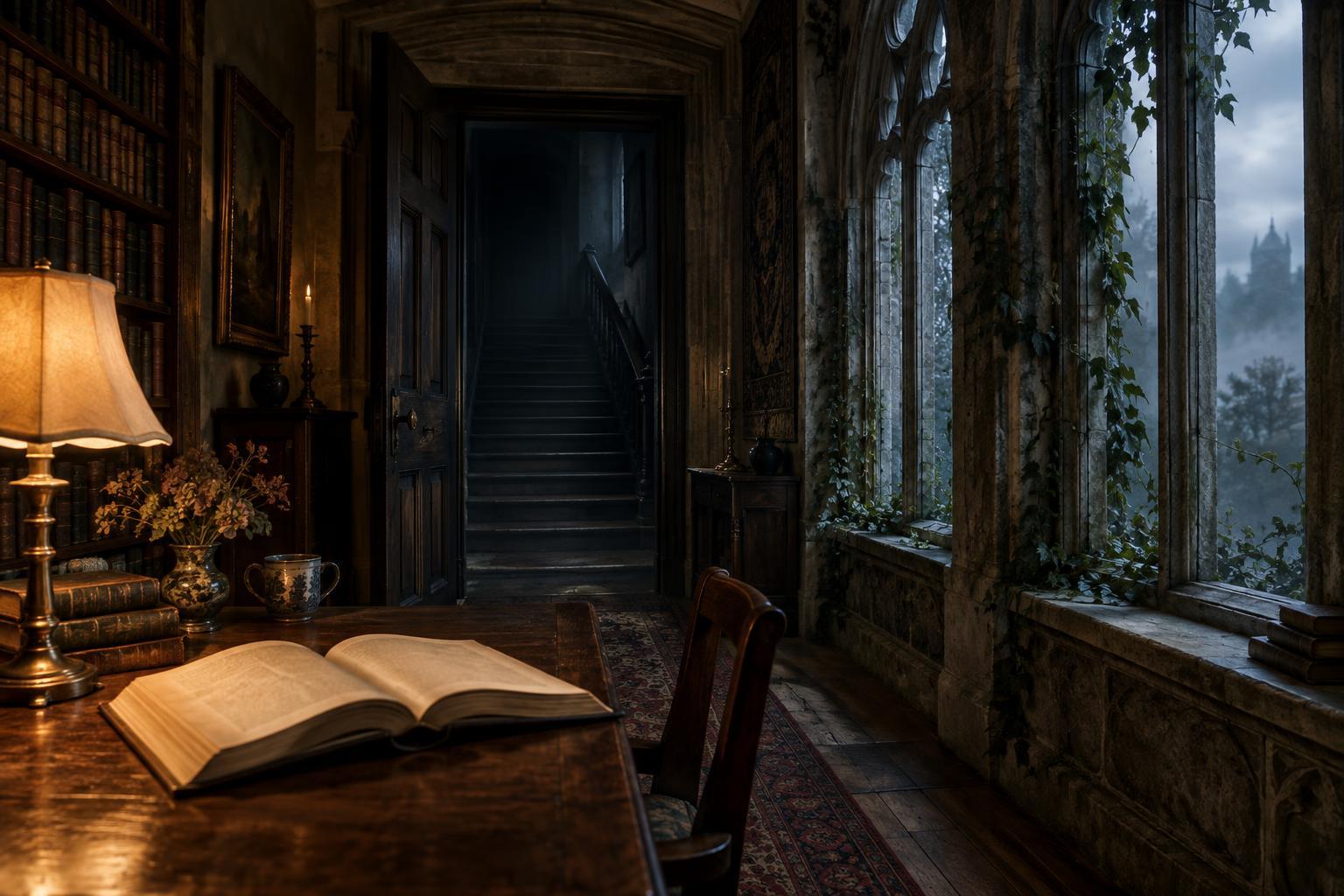
Gothic settings are often associated with old houses, ruins, remote estates, and enclosed institutions. Such places can hold traces of earlier lives while limiting a character’s freedom to leave or learn the truth. Yet Gothic fiction does not need a castle. A small apartment, an inherited business, or a close-knit neighborhood can serve the same purpose if its customs and spaces make the past difficult to escape.
Horror can take place almost anywhere: a crowded street, a familiar kitchen, a campsite, or an unfamiliar building. The setting matters because it shapes the character’s options. A locked door, an exposed path, or a room full of people who do not believe the protagonist can each create a different kind of fear.
When reading, ask what the place does rather than merely how it looks. Does it trap people, conceal evidence, preserve a history, or make a character doubt their senses? A setting that seems to remember becomes especially Gothic; a setting that turns daily routines into potential hazards may feel more directly horrific. Many stories do both.
A useful distinction for readers and book groups
Instead of debating whether a book is “really” horror or “really” Gothic, try identifying the work each tradition performs within it. Where does the story offer a clear threat, and where does it sustain uncertainty? What does the protagonist fear losing: safety, belonging, control, or a trusted account of the past? The answers can change from chapter to chapter.
For a book-group discussion, choose one setting and trace how its meaning develops. Note its first description, the secrets attached to it, and what a character can finally do there. This keeps the conversation grounded in the story while making room for different responses. A scene that frightens one reader may intrigue another; both reactions can reveal how fear and atmosphere work together.