Two starting points for the imagination
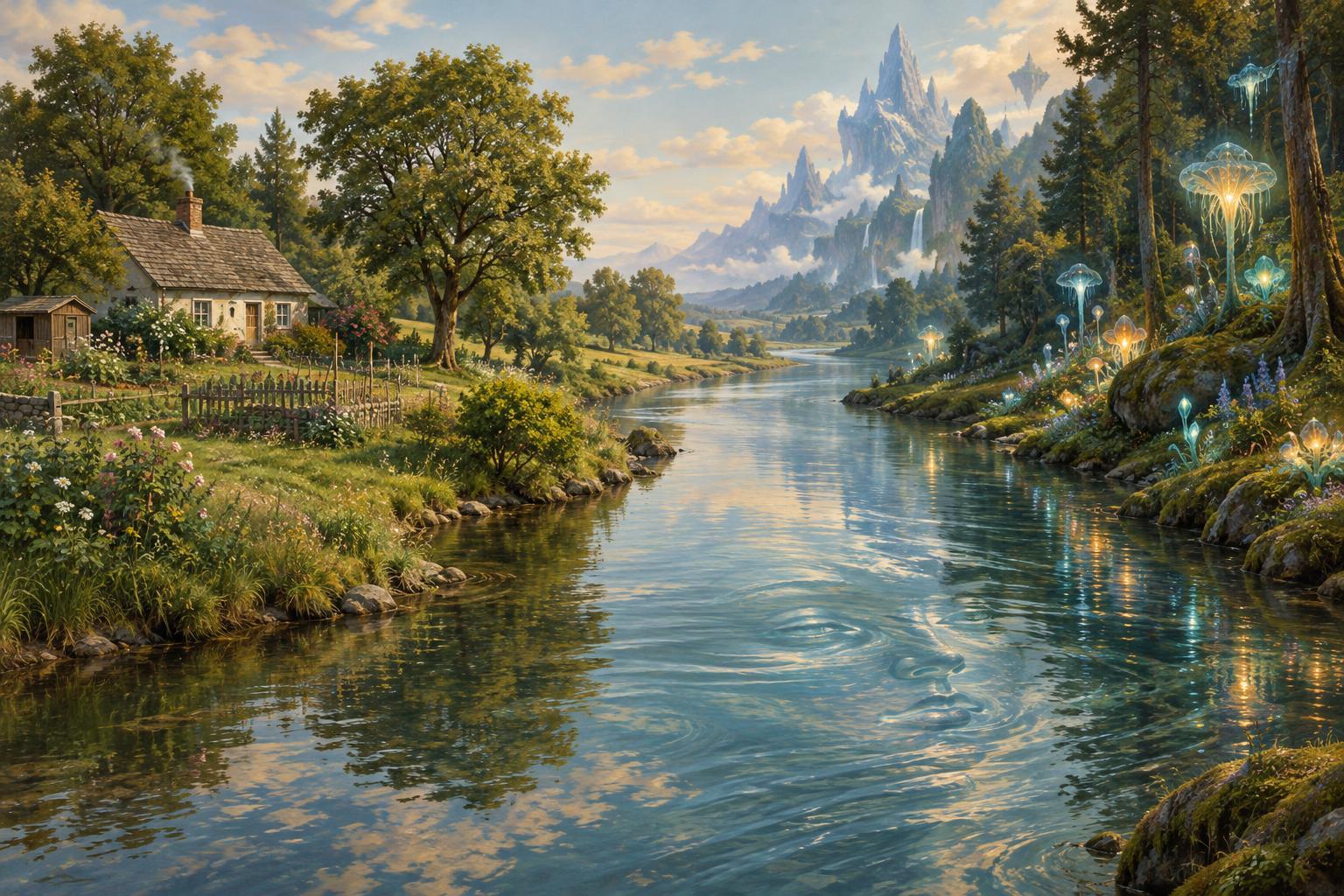
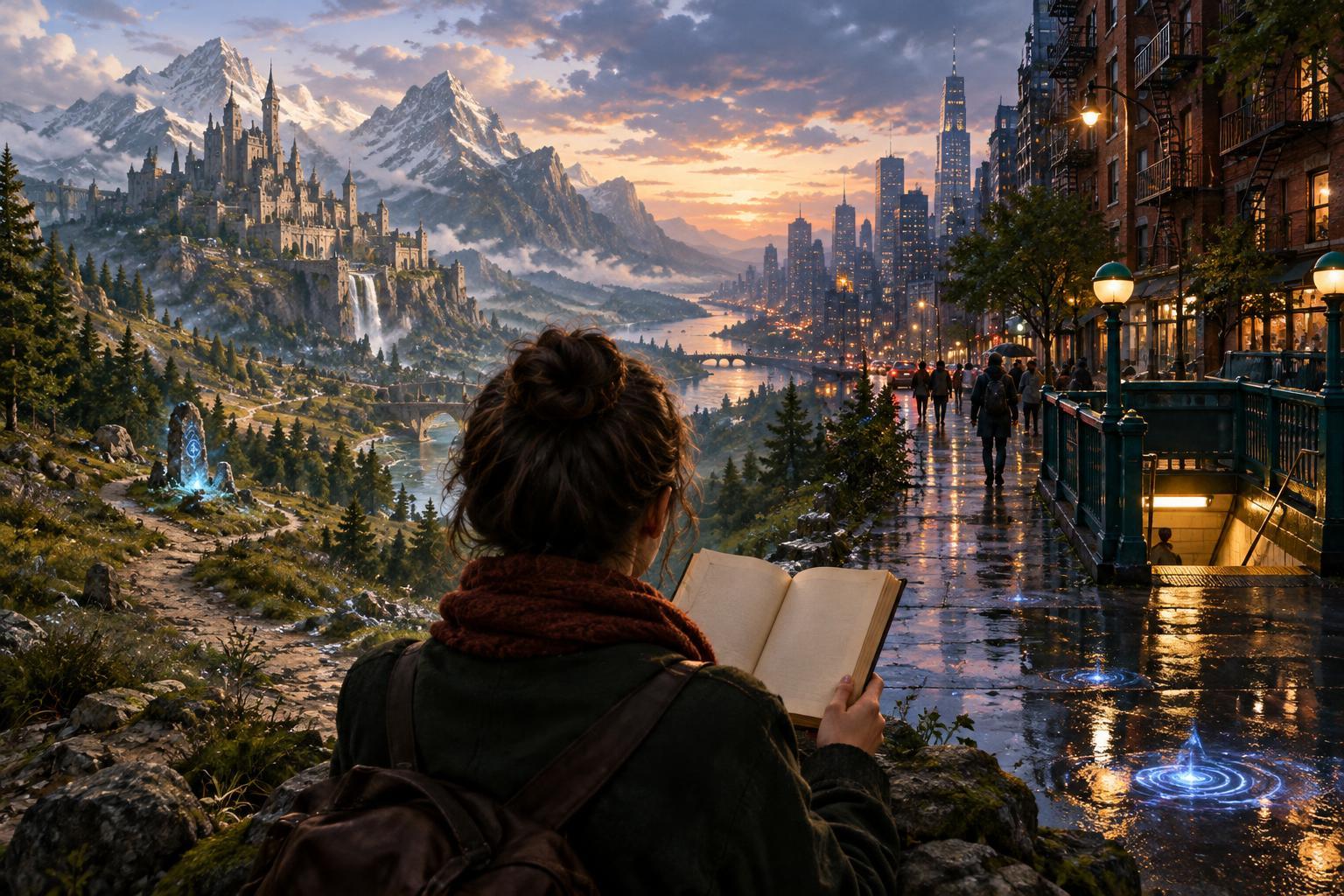
Epic fantasy often begins with a world that feels separate from our own. Its geography, histories, cultures, and rules of magic may all need to be introduced. Urban fantasy more often begins with a recognizable world—a city, neighborhood, or ordinary workplace—then asks what might be concealed within it. These are tendencies rather than strict rules, but they help explain why the genres can feel different even when both contain spells, monsters, and dangerous journeys.
Consider two imagined openings. In one, a courier crosses a mountain pass carrying a message that could change an alliance between kingdoms. In the other, a courier notices that a familiar shortcut has begun appearing on no map except one drawn by a stranger. Both stories can lead to sweeping adventure. The first invites readers to learn the shape of a new world; the second makes them question the shape of a world they thought they knew.
Scale changes what a setting must do
In epic fantasy, a map can help organize the story’s stakes. Borders, trade routes, sacred places, and long journeys give characters reasons to meet or clash. A conflict may affect a kingdom, a people, or the future of the world. The setting does more than provide scenery: distance can delay help, an old rivalry can complicate a mission, and a landscape can preserve evidence of earlier choices.
Urban fantasy may concentrate that same world-building energy into fewer streets. A train platform, apartment building, or late-night café can become a meeting place for ordinary and magical lives. Its questions often concern proximity: Who knows the secret? Who benefits from keeping it? What happens when an uncanny event disrupts a daily routine? An urban story can have enormous stakes, but a familiar setting lets readers feel those stakes through immediate details.
How readers learn the rules of magic
A secondary world may ask readers to learn customs alongside magic. An epic fantasy author can reveal both through action: a character refuses a gift because accepting it creates an obligation, or a spell fails outside a place where it has power. Readers need not receive every explanation at once. The most useful details clarify a choice, create a problem, or make a place memorable.
Urban fantasy has a different balancing act. Because much of its setting is recognizable, the story can use an everyday expectation as a shortcut. If a character takes a bus to work, readers already understand the journey; the surprise might be who else is riding. The author still needs to establish the supernatural rules clearly enough that discoveries and consequences feel earned. In either genre, a world is convincing less because everything is explained than because its details have consequences.
Different pressures on characters
Epic fantasy frequently places characters inside large histories. A protagonist may inherit a duty, challenge a tradition, or discover that a familiar account of the past is incomplete. The pleasure for readers can come from watching a personal decision ripple across many places and relationships. Even a quiet scene matters when it reveals why someone might risk that wider world.
Urban fantasy can put pressure on the boundary between public and private life. A character might have to protect a secret while keeping a job, caring for a friend, or deciding whom to trust on their own block. That tension gives the extraordinary a practical edge. Neither genre requires a chosen hero or a hidden magical society; these are possibilities, not definitions. Both are strongest when the characters’ choices make the imagined world matter.
Choosing a reading path—or discussing the overlap
If you enjoy gradual immersion in unfamiliar places, layered histories, and journeys that change the political or cultural landscape, try epic fantasy. If you like discovering strangeness within recognizable routines, try urban fantasy. Readers who prefer one may still find plenty to enjoy in the other: an epic can linger on the intimate life of a city, while an urban fantasy can reveal a history far larger than its streets.
For a book-group conversation, ask how the story teaches you its world. Which details did you have to learn, and which did the author expect you to know already? Where does magic create a new possibility, and where does it impose a cost? Those questions work even when a book resists a neat label. Genre terms are useful guides to a reading experience, not fences around what an imagined world can become.