The difference is more than the disaster
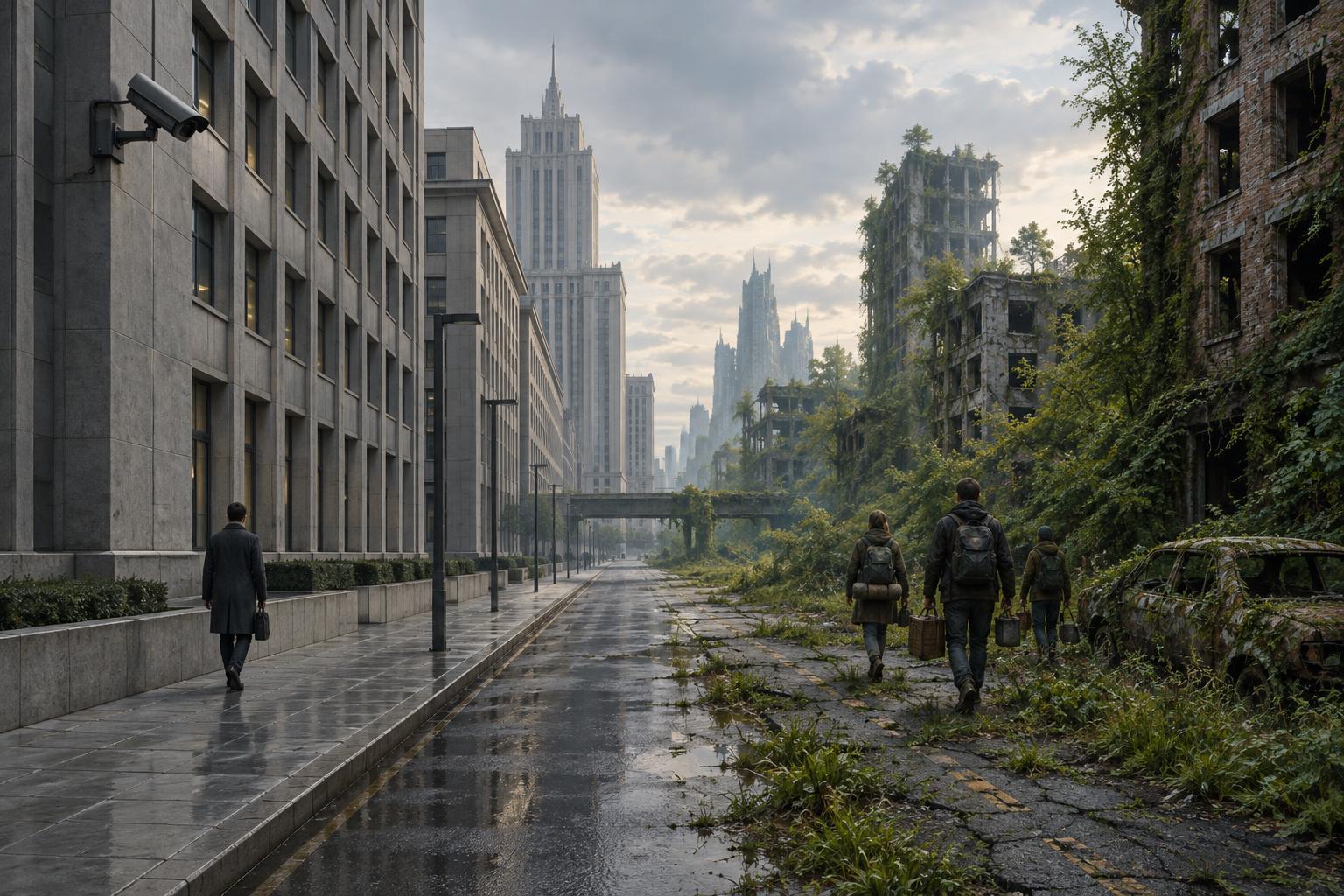
Dystopian and post-apocalyptic fiction both imagine lives under extreme pressure. A familiar city may become dangerous, ordinary routines may disappear, and characters may have to decide whom they can trust. The settings can look so similar that the labels seem interchangeable. A useful distinction is to ask what creates the story’s central difficulty: a social system that controls people, or the aftermath of a catastrophe that has broken the systems they relied on.
A dystopia is an imagined society in which laws, customs or institutions make life oppressive, often while claiming to preserve order or serve a greater good. A post-apocalyptic story takes place after a large-scale collapse, whether its cause is disease, war, environmental disaster or something left unexplained. Neither definition dictates the ending. Characters in either kind of story may resist, adapt, rebuild or simply try to get through the day.
Dystopia asks who makes the rules
In dystopian fiction, power has a recognizable shape. Someone sets the rules, decides who belongs and determines what happens to people who refuse to comply. Control might be enforced through surveillance, restricted movement, manipulated information or social pressure rather than open violence. The story’s tension often comes from the gap between what the society says it provides and what its residents experience.
Imagine a town where every household receives enough food, but only if its members submit detailed accounts of their private conversations. The streets might be clean and the shops well stocked. It is still a dystopian premise because the apparent stability depends on coercion. A reader can look beyond the setting’s grim or polished appearance and ask: Who benefits from this arrangement? Who pays for it? What choices are people allowed to make?
Post-apocalyptic fiction asks what remains
In post-apocalyptic fiction, a rupture has changed the conditions of everyday life. Supply networks, communications, public services or shared assumptions may no longer work as they once did. Characters face practical questions about food, shelter, travel and safety, but those needs can lead to deeper questions. What skills are worth keeping? Which obligations survive when institutions do not? How do people build trust without familiar guarantees?
The catastrophe itself does not have to dominate the page. A story might begin years later, when a child knows the old world only through objects and memories passed down by others. Its focus could be less on the event than on the lives made afterward. Post-apocalyptic settings can hold cooperation and humor alongside loss; devastation does not require every character or community to behave in the same way.
Where the two forms meet
A collapse can create the conditions for a new oppressive order. Suppose a surviving settlement controls its only source of clean water and demands unquestioning loyalty in exchange for access. The wider setting is post-apocalyptic, while the settlement’s rules introduce a dystopian conflict. A story may begin with the work of survival and gradually shift toward a struggle over authority.
The reverse combination is possible too. An established dystopia might suffer a further disaster, forcing characters to decide whether to restore the old system or try something different. Genre labels are tools for noticing a story’s emphasis, not fences around it. When a book fits both, it may be more revealing to ask which pressure drives the characters’ hardest decisions at a given point.
A simple way to read the distinction
When choosing a book or discussing one with a group, start with three questions. What changed the world of the story? Who has power now, and how do they use it? What does the main character stand to lose by making a different choice? The answers can reveal whether the plot is most concerned with surviving broken structures, challenging an organized system or exploring the uneasy space between them.
Pay attention as well to small details: a ration card, a forbidden song, a repaired bicycle, a rule about where people may gather. Such objects and habits show how a crisis reaches into ordinary life. Dystopian fiction often invites readers to examine the cost of imposed order; post-apocalyptic fiction often invites them to consider what people preserve or invent when order falls away. Both can make an imagined world feel close by grounding large questions in daily choices.