Mistaking recognition for understanding
A story set near home invites a particular pleasure: you recognize a street name, a stretch of open land, or the way people plan around a long drive. That recognition can make you feel immediately close to the characters. It can also tempt you to assume you understand their choices before the story has shown you who they are.
Try treating familiar details as an invitation rather than an answer. Ask what the setting means to this character, at this point in their life. A place you associate with freedom might feel confining to someone who cannot leave it. The same town can hold comfort, boredom, opportunity, and grief, depending on the person moving through it. Your experience helps you notice possibilities; it need not settle the interpretation.
Turning every detail into an accuracy test
Readers often spot details that seem off: a journey takes too little time, a seasonal description feels unfamiliar, or a fictional shop appears where they remember an empty lot. Some mismatches matter. Others reflect a writer’s decision to compress time, combine locations, or invent a setting within a recognizable region. A story is not always trying to serve as a map.
When something jars, separate the observation from your conclusion. First ask, “What detail pulled me out of the story?” Then ask whether it changes the characters’ situation or merely differs from your own memory. If a plot depends on a place having no public transportation, for example, that premise may deserve attention. If a café sits on an unexpected corner, its role in the story may be more useful to consider than its imaginary address.
Treating one character as the voice of a whole region
A familiar place can make a character’s opinions sound like a statement about everyone who lives there. A bitter narrator describes a town as closed-minded, and a reader who knows the town may want to defend it. Another character calls the same place welcoming, and the reader may feel the book has overlooked people who would disagree. Neither character has to be a spokesperson.
Pay attention to who is speaking and what they stand to gain from their account. Is a character remembering childhood, trying to persuade a newcomer, or explaining why they left? Does another person in the story see the place differently? Reading for these differences can reveal tension that disappears when we ask only whether a portrayal is fair. It also leaves room for residents whose lives do not resemble our own.
Assuming your memories cover every version of the place
Even neighbors do not experience a place in identical ways. Age, work, family ties, access to a car, and the parts of town a person can afford to live in can shape what feels nearby or out of reach. A reader may know a region well and still encounter a character’s version of it for the first time. That difference does not automatically make the story wrong or the reader uninformed.
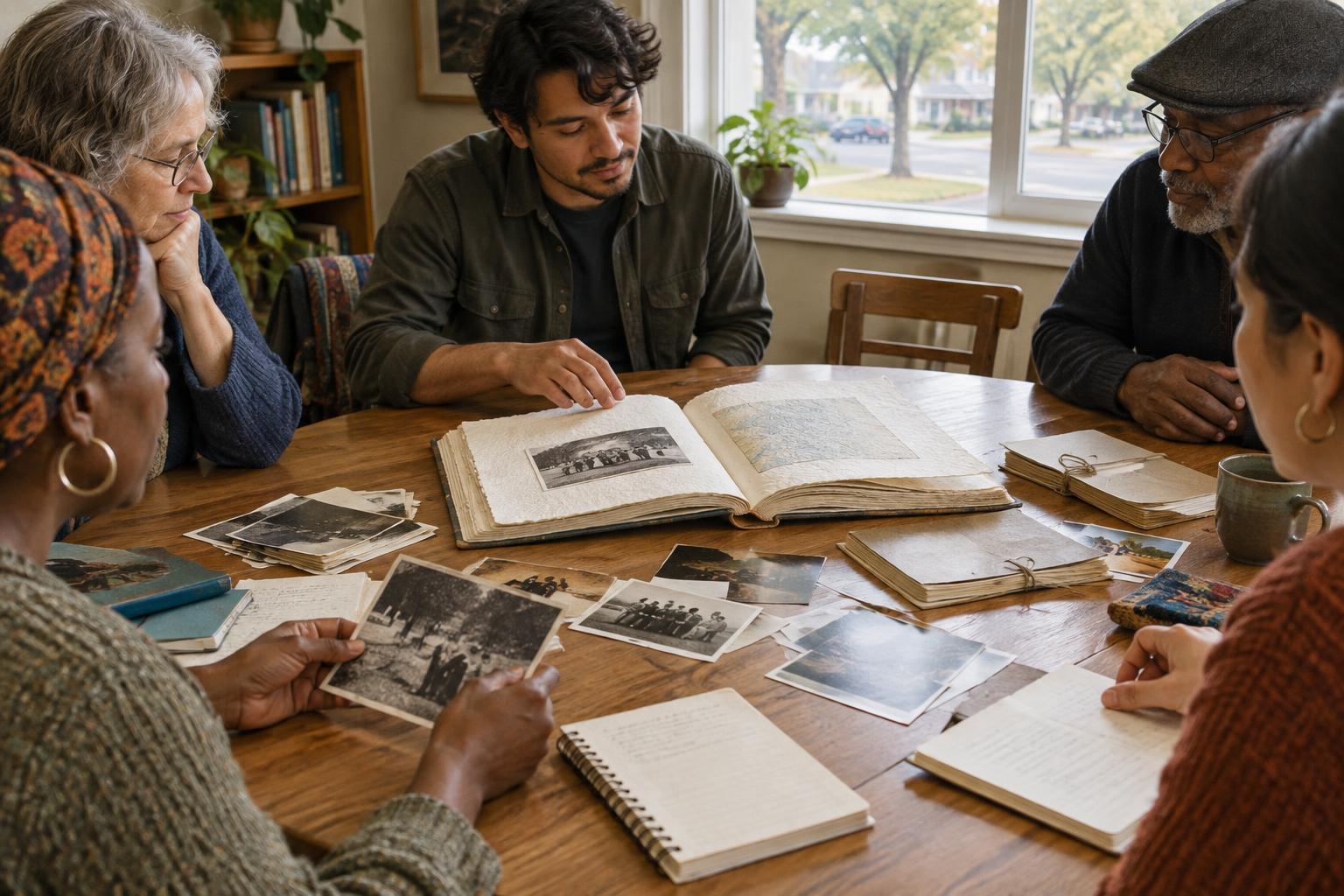
It helps to name the limits of your perspective without setting it aside entirely. Instead of saying, “That is not what this place is like,” you might ask, “Which part of this place have I known, and which part is this character showing me?” The question works especially well in a book group, where readers may recognize the same setting but bring very different memories to it.
Letting local details overshadow the story
Familiar landmarks are easy to discuss. They can also take over a conversation while quieter elements—the structure of a scene, a character’s silence, a change in tone—go unnoticed. Place matters not only because a writer names it, but because it shapes what characters can do, remember, or imagine. A road may connect two households while emphasizing the distance between them. A familiar view may become strange after a loss.
After noting what you recognize, try a second pass with a different question: What would this scene lose if it happened somewhere else? Sometimes the answer is a particular landscape or local custom. Sometimes the setting matters because a character believes everyone knows their history. Reading both ways—through your knowledge of the place and through the story’s choices—makes room for discovery without asking you to forget what you know.