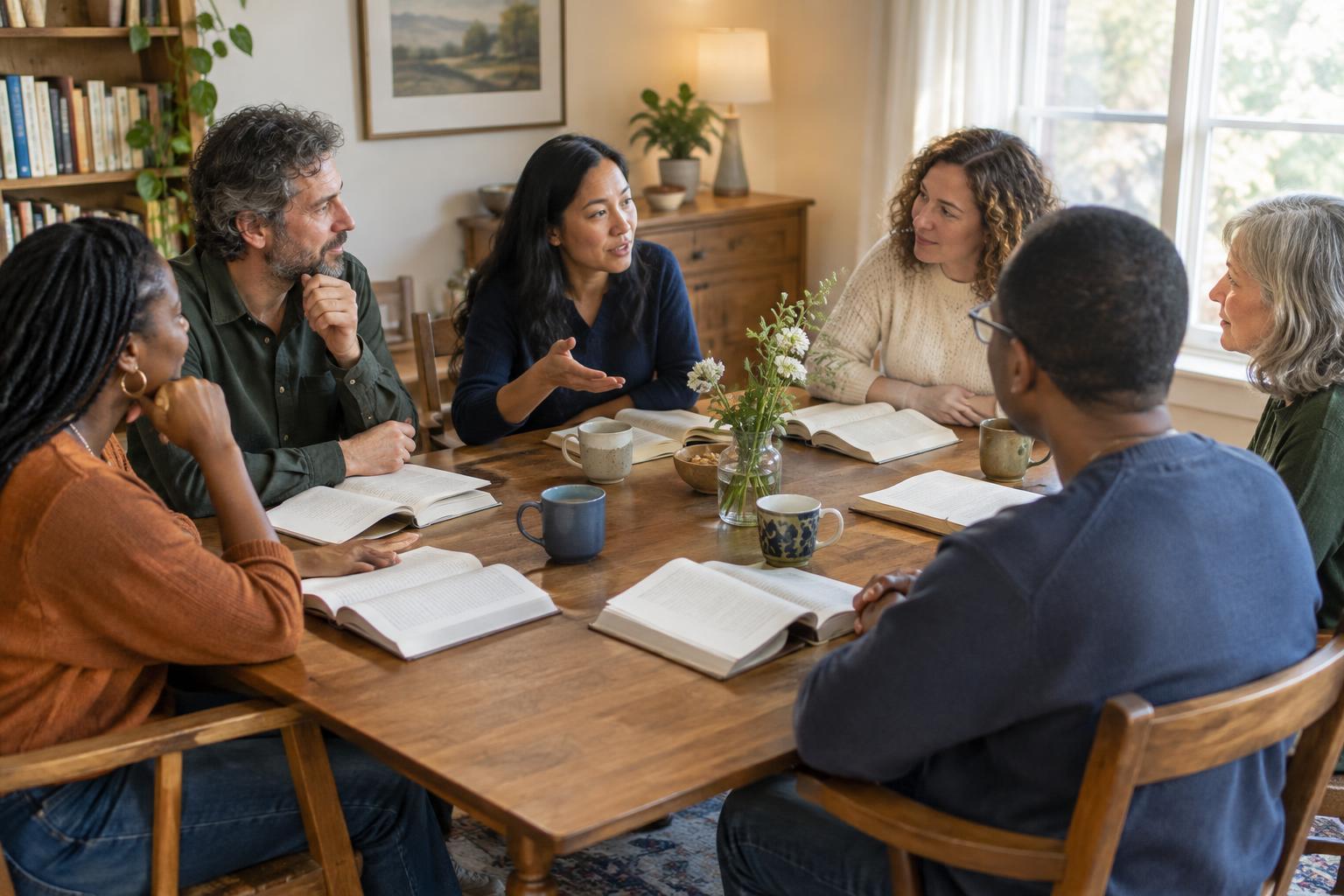
Before the meeting: choose a light-touch plan
A useful agenda gives the conversation a shape without deciding where it must go. Choose a facilitator for the evening, even if the role rotates from meeting to meeting. That person can watch the time, invite quieter members in, and move the group along when a topic has run its course. They do not need to be an expert on the book.
Prepare three or four open-ended questions rather than a long quiz. Questions such as “Which relationship changed most for you?” or “Where did the book ask you to reconsider an early assumption?” leave room for different readings. If some members may not have finished, agree in advance whether the meeting will include spoilers. The schedule below assumes everyone is comfortable discussing the ending.
0–20 minutes: arrive and share first impressions
Use the first 10 minutes for greetings, settling in, and a quick reminder of the plan. If food or drinks are part of the gathering, this is a good time to get them without interrupting a longer conversation. The facilitator can state the spoiler agreement and make clear that passing on a question is always welcome.
From minute 10 to minute 20, go around the group with a simple prompt: “What stayed with you after you closed the book?” Ask for a brief answer from each person before opening the floor. This first round gives everyone a place in the conversation and reveals which themes may deserve more time. It also lets a member who did not love the book contribute without having to defend a rating.
20–60 minutes: follow the main conversation
Set aside 40 minutes for two or three substantial questions. Begin with one that addresses the book as a whole, then follow the group’s interest toward characters, structure, setting, or ideas. For a novel, you might ask how a character’s choices shaped the ending. For a memoir or essay collection, you might ask how the narrator builds trust with the reader. The best follow-up is often a request for a moment in the book that supports someone’s interpretation.
Make space for disagreement without turning the meeting into a contest. Members can describe what they noticed and why, rather than trying to prove a single correct reading. If one voice is dominating, the facilitator might ask, “Has anyone seen that scene differently?” If the discussion drifts far from the book, acknowledge the connection and return to a question on the page. You do not have to cover every prepared prompt; a lively, focused exchange is more useful than a completed list.
60–75 minutes: look closely at one passage or choice
A short close-reading segment can refresh the conversation after broader discussion. Invite members to name a passage, image, line of dialogue, or structural choice they found striking. Someone can read a brief excerpt aloud if the group enjoys that, or everyone can simply turn to the relevant page. Ask what the choice does for the book: Does it change the pace, deepen a character, create uncertainty, or echo an earlier moment?
Keep this part accessible to people who did not mark up their copies. The facilitator can bring one passage as a backup, but no one needs to arrive with notes. A member might instead recall the way a chapter ended or how the setting felt. Paying attention to craft gives the group something concrete to discuss while leaving room for personal responses.
75–90 minutes: close the conversation and look ahead
Spend the final 15 minutes gathering last thoughts and making plans. A useful closing prompt is “Did anyone’s view of the book shift tonight?” It allows members to mention a new perspective without requiring them to change their minds. If an important question remains open, note it as an interesting place to stop rather than rushing to settle it.
Confirm the next meeting’s book, place, and time before people leave. If the choice is still open, decide who will suggest titles and when the group will choose. End on schedule when possible: a reliable finish makes the club easier to fit into busy lives. The agenda has done its job if everyone leaves feeling they had room to think, speak, and listen.