What makes a community story collection?
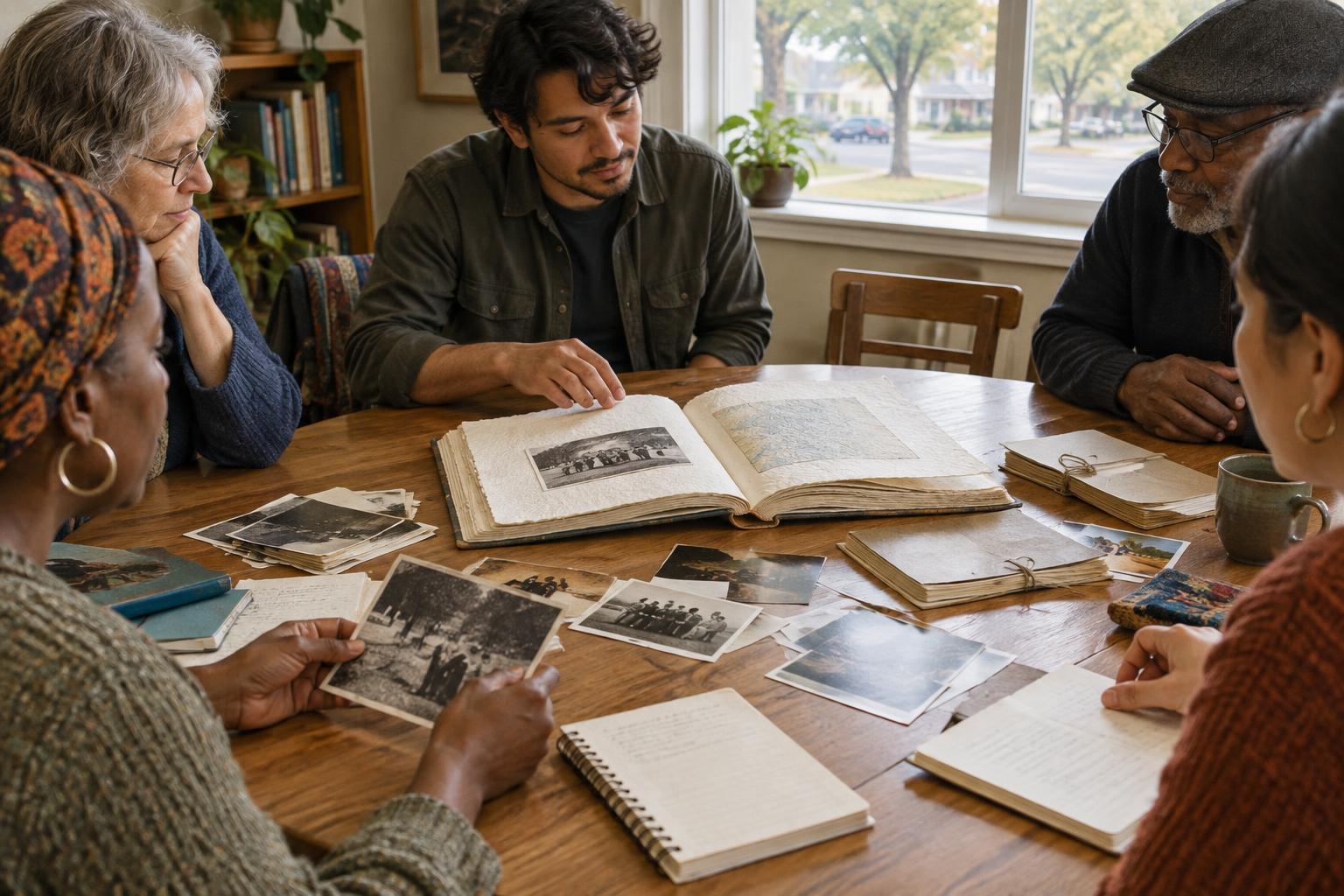
A community story collection gathers accounts connected by a place, an event, a tradition or a group of people. It might include edited interviews, first-person essays, family memories, photographs with captions, recipes or short pieces of fiction inspired by local life. Some collections aim to preserve memories; others invite readers to consider how people experience the same place differently.
You do not need to know the community beforehand to read one. Start by noticing the question that seems to bring the stories together. Is the collection about growing up in a town, making a home after a move or remembering a changing landscape? That question gives you a useful starting point, but let individual stories complicate it. A collection is more than a single account of what a community is like.
Read the frame before the stories
Take a few minutes with the introduction, acknowledgments and contributor notes, if the book has them. They may explain who invited the storytellers, how the accounts were gathered and whether speakers reviewed their words before publication. A collection built from recorded conversations can feel different from one in which contributors wrote and revised their own pieces. Neither approach is automatically better, but the process affects what reaches the page.
Also look at the order of the stories. An editor might arrange them by neighborhood, generation, subject or a loose emotional arc. Notice whether photographs, maps or captions add context or steer your interpretation. These choices help make the book readable, yet they are still choices. Asking how the collection was shaped is a way to appreciate the work behind it while staying curious about what it cannot show.
Listen for distinct voices
As you read, pay attention to how each person tells a story, not just what happened. One contributor may build a scene through small details; another may focus on a turning point or explain a family custom. In an interview, a brief answer might carry as much weight as a long account. Try not to treat a speaker as a spokesperson for everyone who shares their background or lives nearby.
It can help to keep a simple reading note with three prompts: What does this person want me to understand? Which details make the experience specific? What questions remain? If two accounts describe the same place differently, resist the urge to decide which one is the definitive version. Differences in age, relationships and daily routines can produce different memories of a shared setting. Those contrasts are often where a collection becomes most interesting.
Notice what a collection cannot contain
No collection can include every resident, family or viewpoint. Some people may not have been asked to contribute; others may have preferred to keep their experiences private. Language, time, access and trust can all shape who participates. If an account touches on a difficult event, remember that a published story may leave out details for reasons the reader cannot know. An absence can prompt a question without inviting a guess about someone’s motives.
Be careful, too, with the word authentic. A story can be sincere and particular without representing an entire region. A rural town, a city block and a family kitchen may each hold several overlapping communities. Rather than looking for a single voice that captures a place, ask how the collection lets people describe belonging, disagreement, change or distance in their own terms.
Bring curiosity to discussion
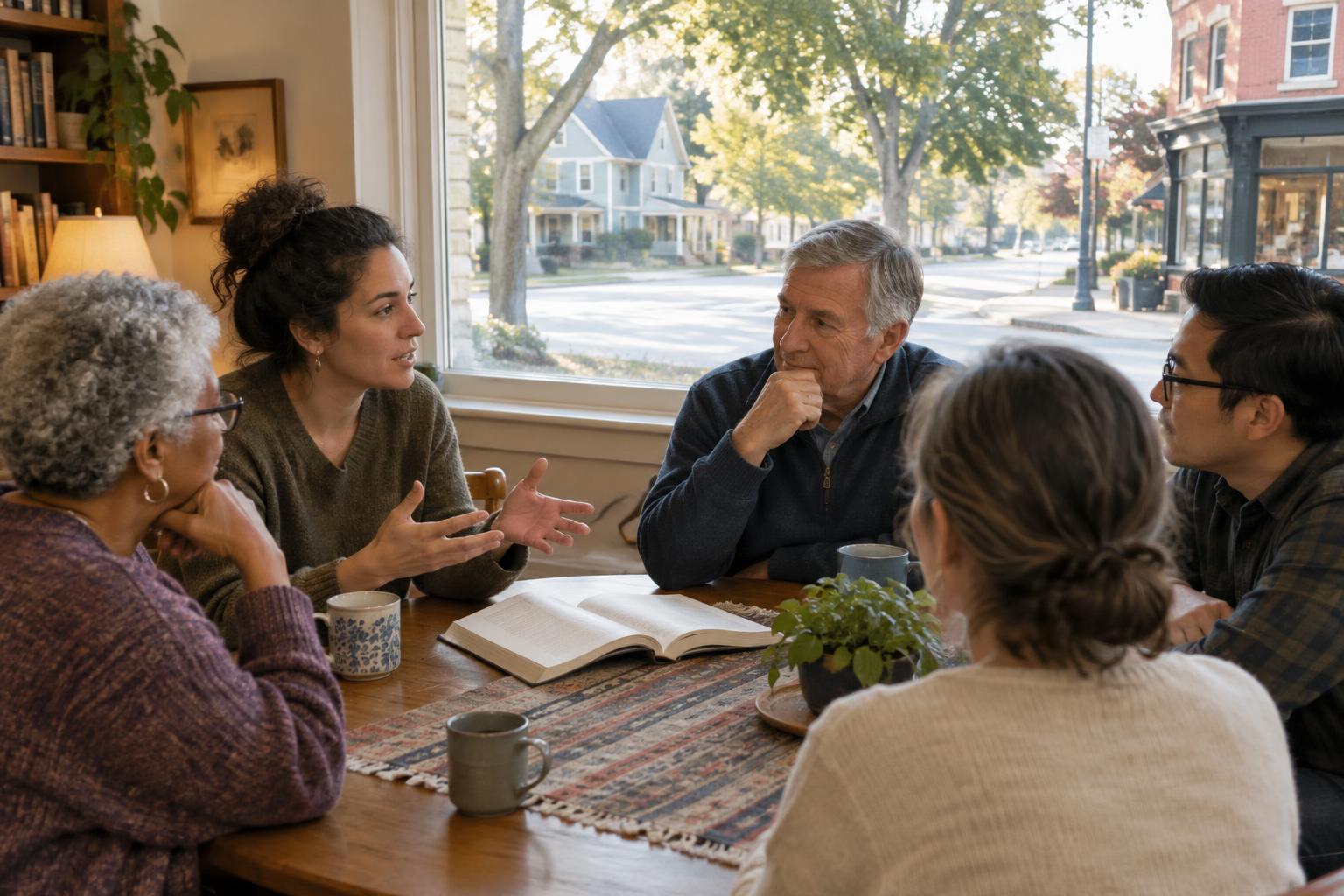
Community collections work well for a reading group because participants can follow different threads. Invite everyone to choose a detail they remember, then ask what made it stand out. Other useful questions include: How did the editor’s arrangement affect your reading? Where did two accounts speak to each other? Did a story challenge an assumption you brought to the book? Keep the conversation grounded in the text rather than asking anyone to explain a community on its behalf.
Reading with care does not require agreeing with every account or setting aside your own memories. It means making room for a person’s perspective while noticing the limits of any one story, including your own. When you finish, return to the collection’s opening question. You may find that the most valuable result is not a tidy answer, but a fuller sense of how many stories a place can hold.